

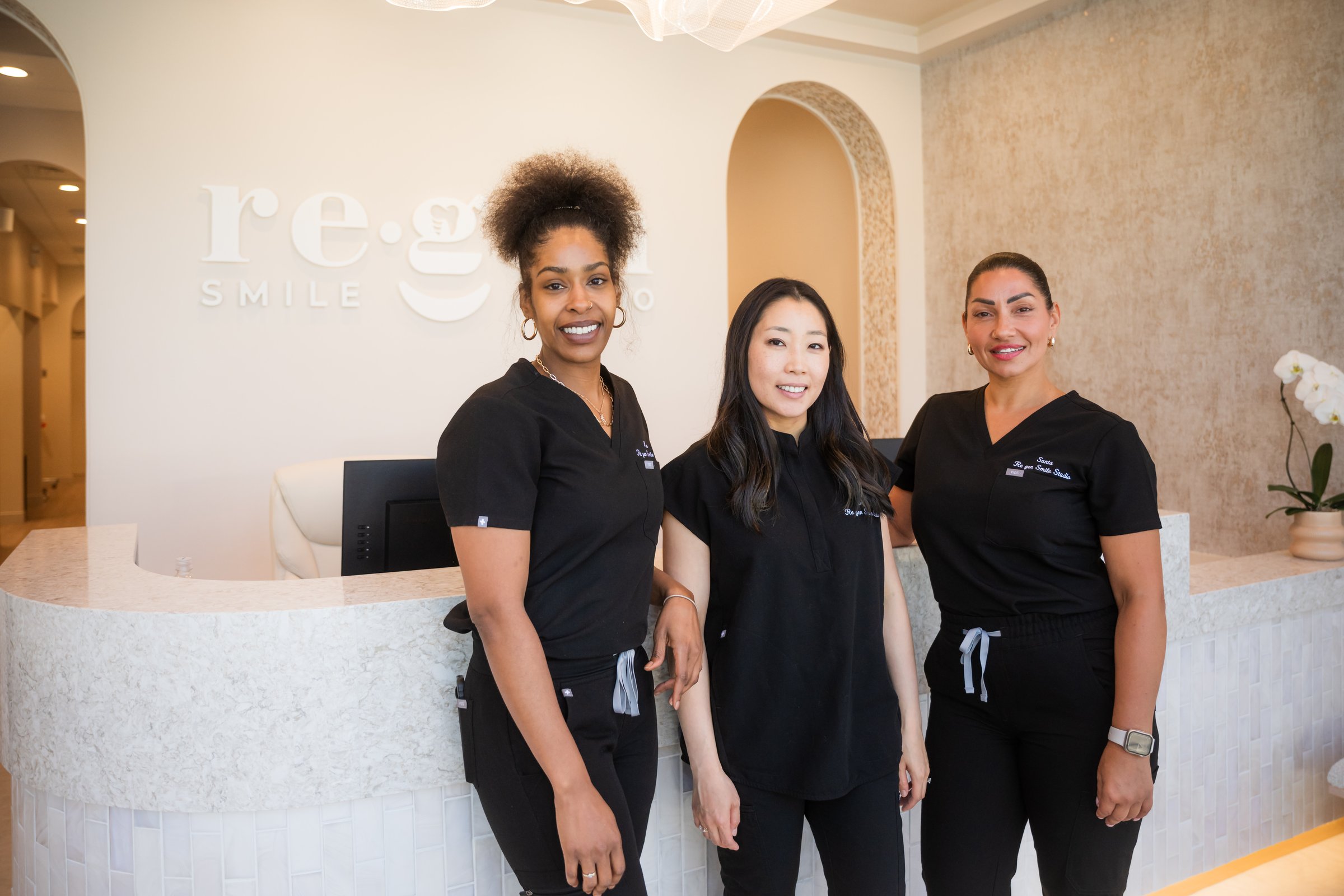
Our dentists
Our founder, Dr. Erin Cho, and Dr. Ashley Choi, both trained at the University of Illinois Chicago.
Meet our team
How a smile design plans several cosmetic changes together, in the right order, so the result still looks like your own teeth.
Maybe one front tooth has always sat a little forward. Maybe there's a chip from years ago, a gap you cover with your lip in photos, and teeth that have gone darker than you'd like. Each of these has its own fix. A smile design, which some people call a smile makeover, is the plan that puts those fixes together, at our studio in Lakeview, Chicago.
Most people picture a smile makeover from someone else's after photo. We'd rather start with your own teeth. We ask what you'd like to change, because the answer is sometimes much smaller than people expect. Then we take photographs and measurements, put them on the screen and talk through what each step would do. Each step is clear to you before it starts, and you can change the plan while it's still a plan.
“There is a look I will not do. Very white, very square, all one size. You can spot it across a room. If somebody asks me for that I will say so, and usually we land somewhere else once they see what their own teeth can actually do.”
A smile design is a plan. Each part of it is something a cosmetic dentist already does on its own: Invisalign to move teeth, whitening to lighten them, bonding to repair chips and small gaps, and porcelain veneers for bigger changes to shape and color. A smile design decides which of these you need, which you don't, and how they fit together.
Some plans have two steps. Some have one. If whitening and a little bonding on one tooth get you where you want to be, that's the plan.
A common belief is that a smile makeover means veneers on every tooth. It doesn't. Dr. Erin likes to start with the most conservative path that still gives you the result you want, and we'll talk through bonding and different kinds of veneers before anything is decided. More of your own teeth stay as they are, and you aren't paying for work you don't need.
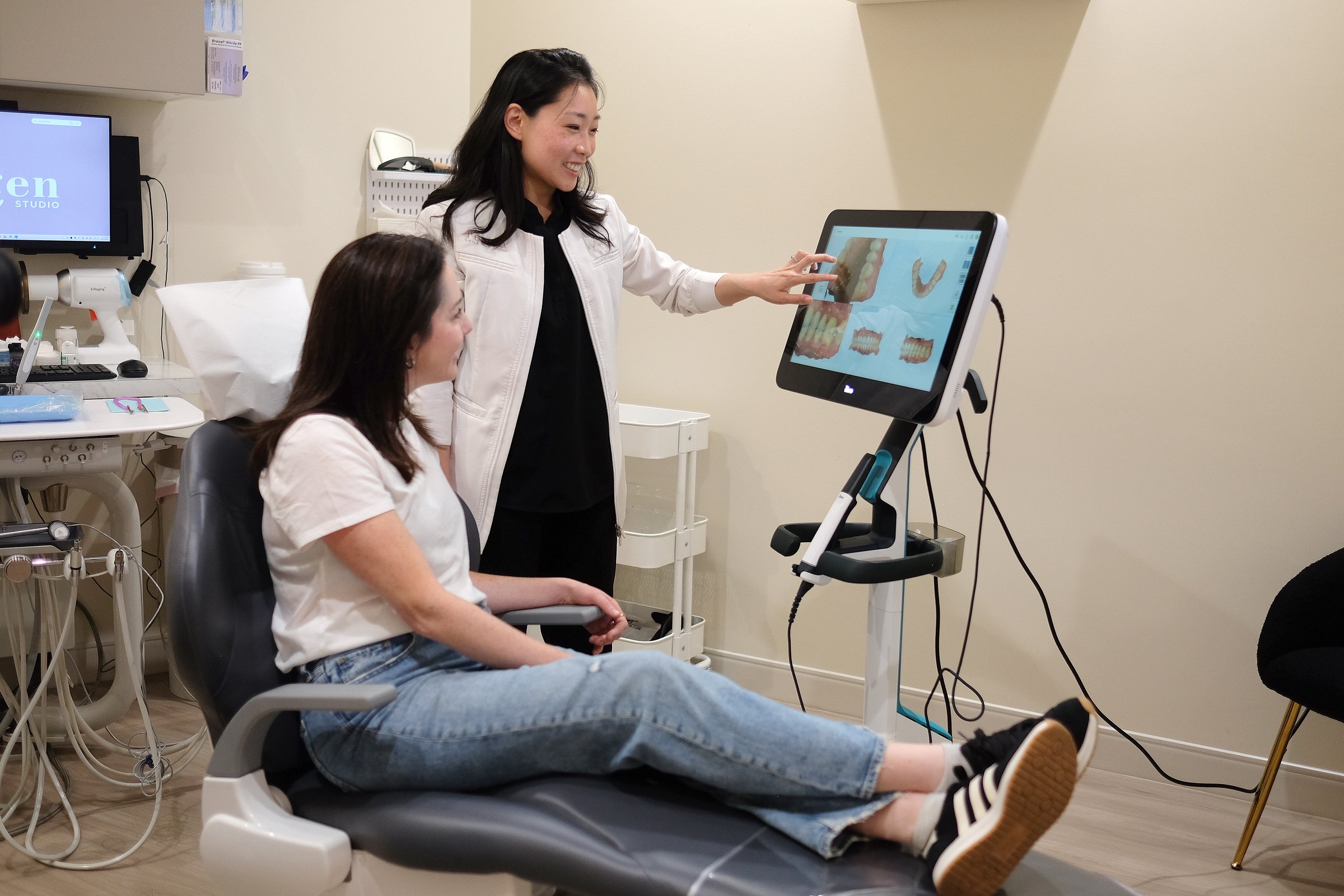
Each step changes what the next one needs. Straighten crooked teeth first and you may need fewer veneers, or none. Whiten first and any bonding or veneers can be matched to the new shade, because whitening doesn't change the color of bonding or porcelain.
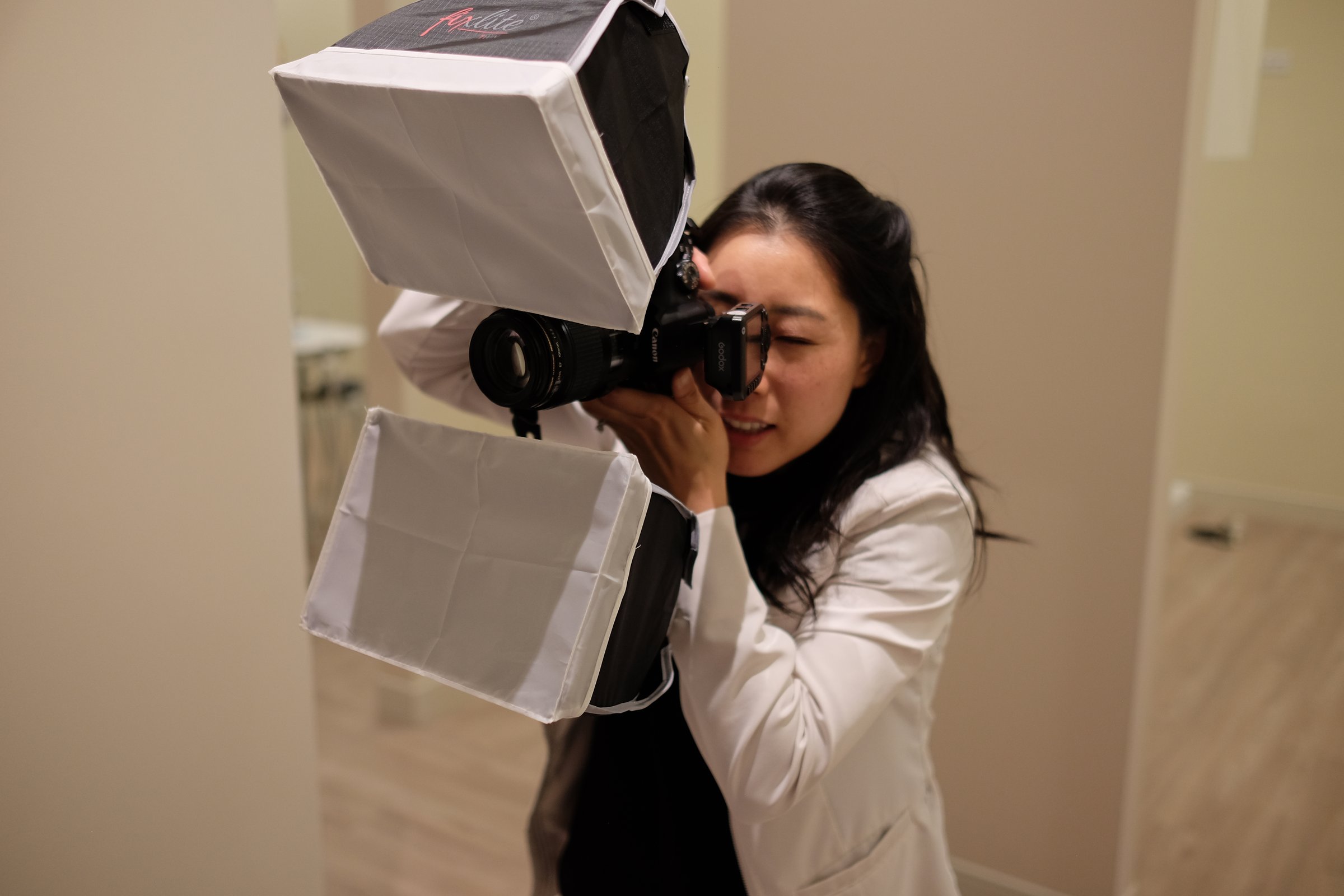
So each change is sized to your face and teeth
“One of my favorite parts of the day is taking photographs.” Dr. Erin Cho
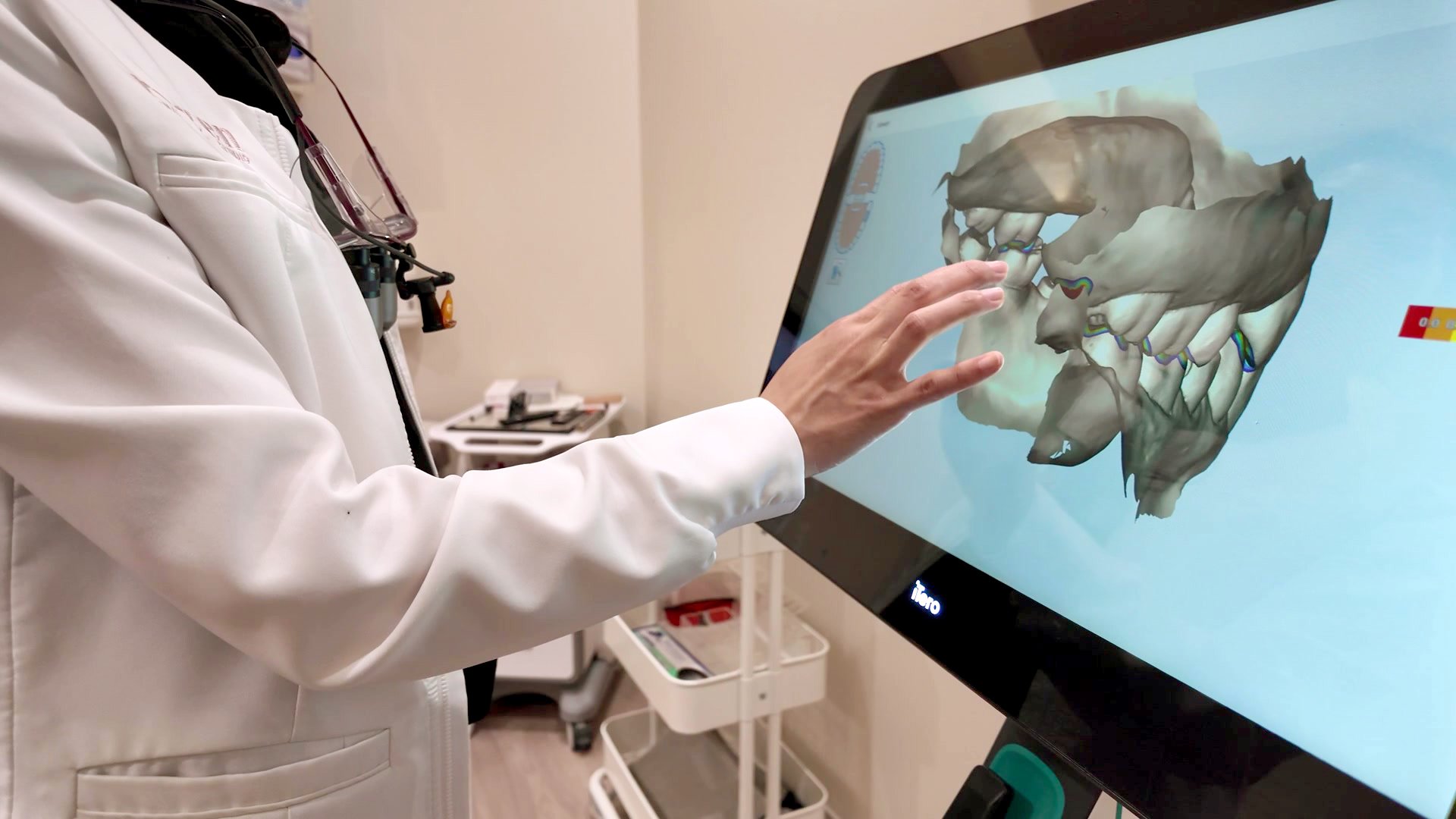
Checked first, because they decide how long the work lasts
“When I put a photo up, people usually go quiet. Then they start asking clearer questions because now they can actually see it.” Dr. Erin Cho
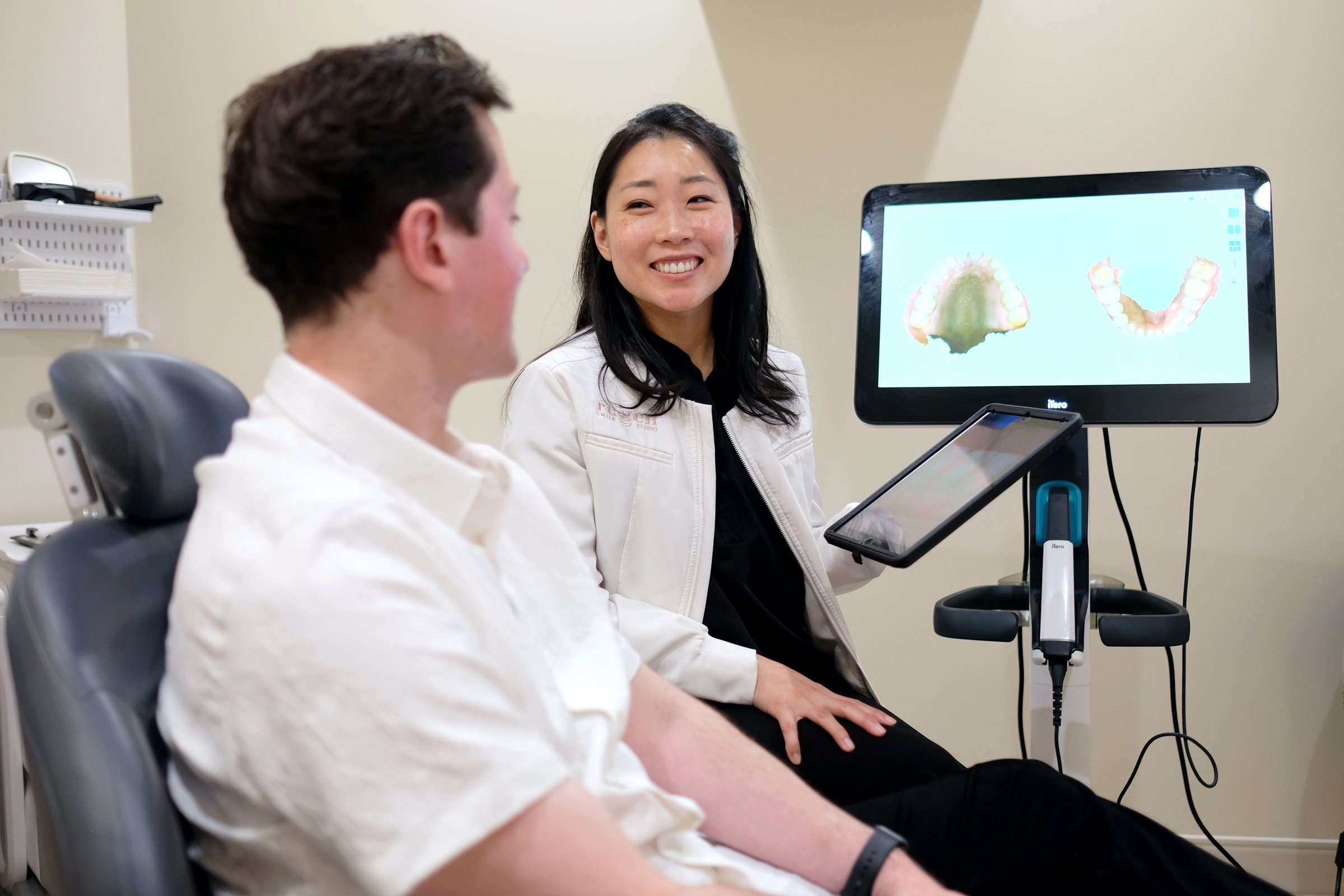
What to change, what to leave, and in what order
“I never want to make someone feel like we're doing more than is truly needed.” Dr. Erin Cho
Because a new smile has to survive chewing, grinding and the next twenty years. If you clench at night, a veneer can chip. If your gums are inflamed, they can pull back and leave a dark line at the edge of new work. So we check your bite, gums and habits before any cosmetic work.
“A mouth is always attached to a whole person and the whole mouth always matters.”
Our founder, Dr. Erin Cho, and Dr. Ashley Choi, both trained at the University of Illinois Chicago.
Meet our team
3208 N Lincoln Ave, Lakeview. Open Tuesday to Friday, with street parking nearby.
About the studioSomething else on your mind? Call (312) 584-0707
Yes. Both mean one plan that combines cosmetic treatments to change how your smile looks.
It depends on what's in it. Whitening and bonding take a visit or two. Straightening or veneers take weeks to months. You'll get a timeline with your plan.
Not always. Small chips, gaps and uneven edges can often be fixed with bonding, and some plans are only whitening and straightening.
Yes. Plenty of people start with whitening or straightening and decide on the rest later. Planning the whole thing first keeps each step heading the same way.
Usually not the cosmetic parts. Work that repairs damage or treats disease may be covered, and our team can check your benefits before you decide.
It should. Shape, length and shade are planned around your face and your own teeth, and we'll tell you if a change would look out of place.
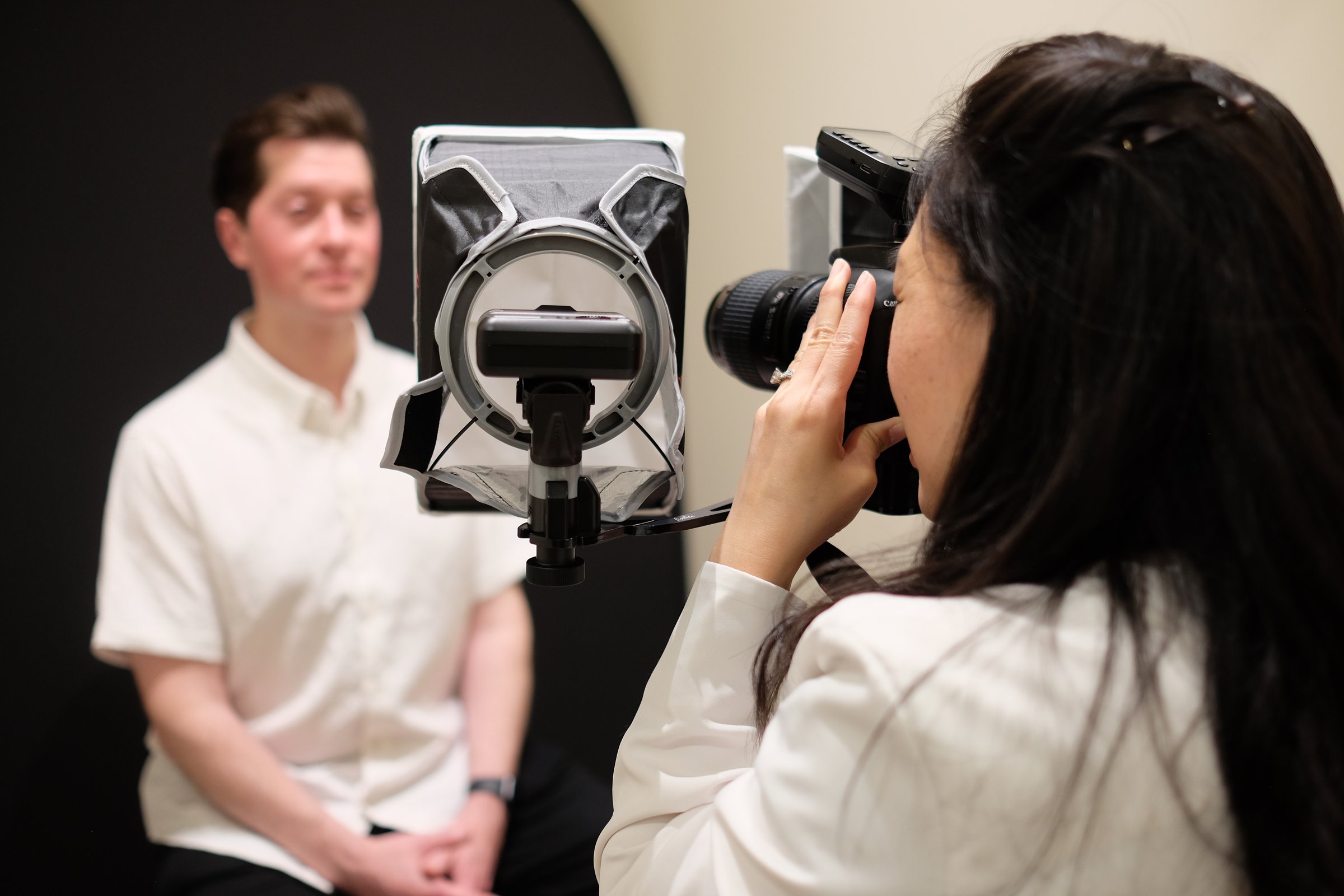
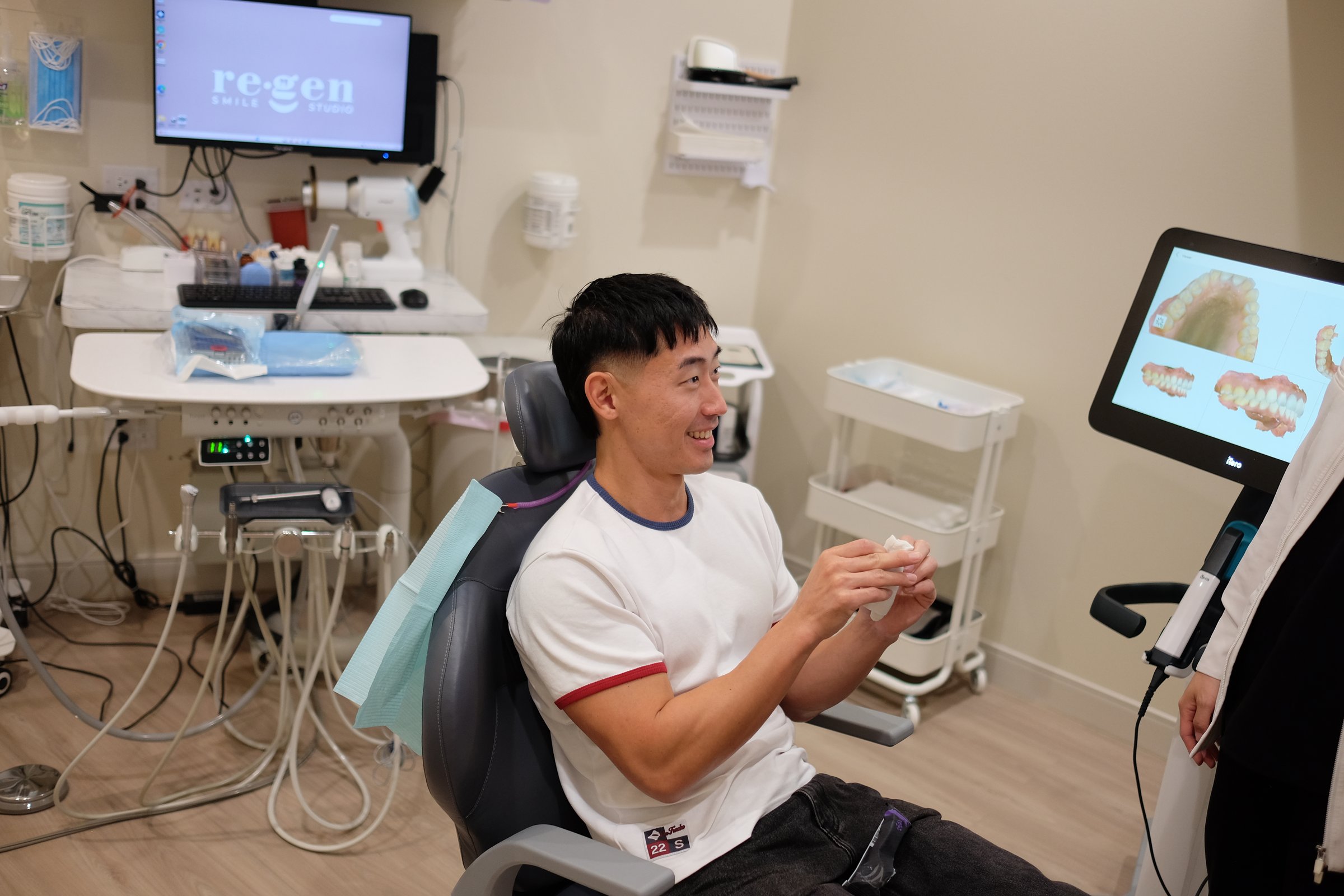
Start with a consultation. We'll take photographs, check your bite and gums, and talk through every option, from the smallest step to a full plan, so you can choose how far to go.