


Our dentists
Our founder, Dr. Erin Cho, and Dr. Ashley Choi, both trained at the University of Illinois Chicago.
Meet our team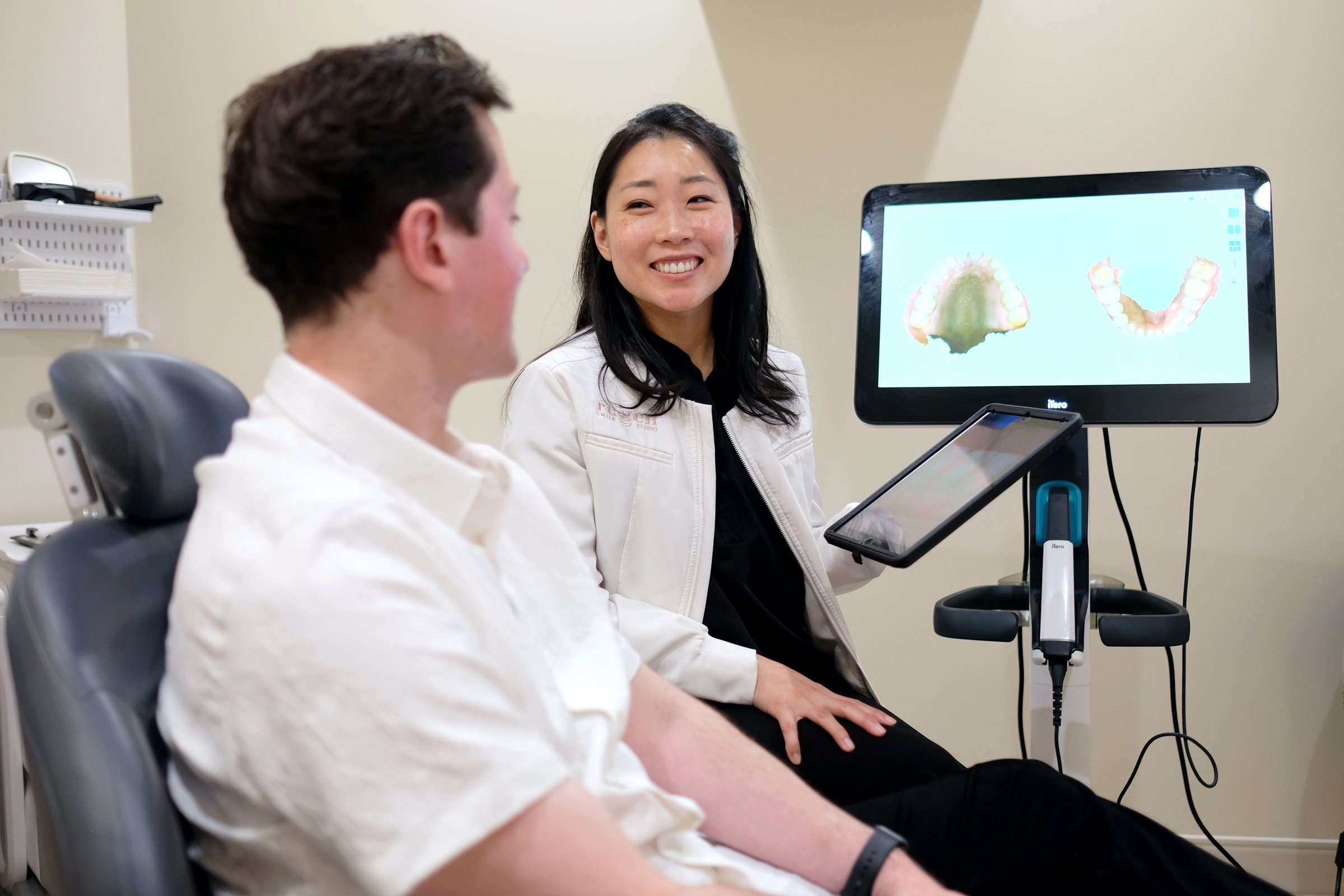
What Invisalign clear aligners can straighten, how treatment works, how long it usually takes, and how to keep the result.
Maybe it's one front tooth that has crept forward since you had braces as a teenager. Maybe it's crowding along the bottom that traps food and never feels clean, or a gap your tongue finds without you thinking about it. Invisalign straightens teeth like these with a series of clear, removable aligners. Each one moves your teeth a small step, with no brackets or wires.
At Re·gen in Lakeview, Chicago, Invisalign is planned by Dr. Erin Cho, a Certified Invisalign Provider and a member of the American Academy of Clear Aligners. Before any aligners are made, we check your gums, your bite and the health of each tooth, because teeth move best in a healthy mouth.
“Another patient came in pretty cautious about Invisalign, but a few months in, her smile had really changed.”
Clear aligners work well for mild to moderate problems with how teeth line up. That covers crowded or overlapping teeth, gaps, teeth that are turned or tipped, teeth that have drifted since braces, and many milder overbites, underbites and crossbites.
They're also used before cosmetic work. If a few teeth are out of line, straightening them first can mean fewer teeth need veneers or bonding, or that less of each tooth has to be shaped.
Severe crowding and large differences between the upper and lower jaw can be more than aligners handle well. If that's you, we'll tell you, and braces or an orthodontist may be the better route.
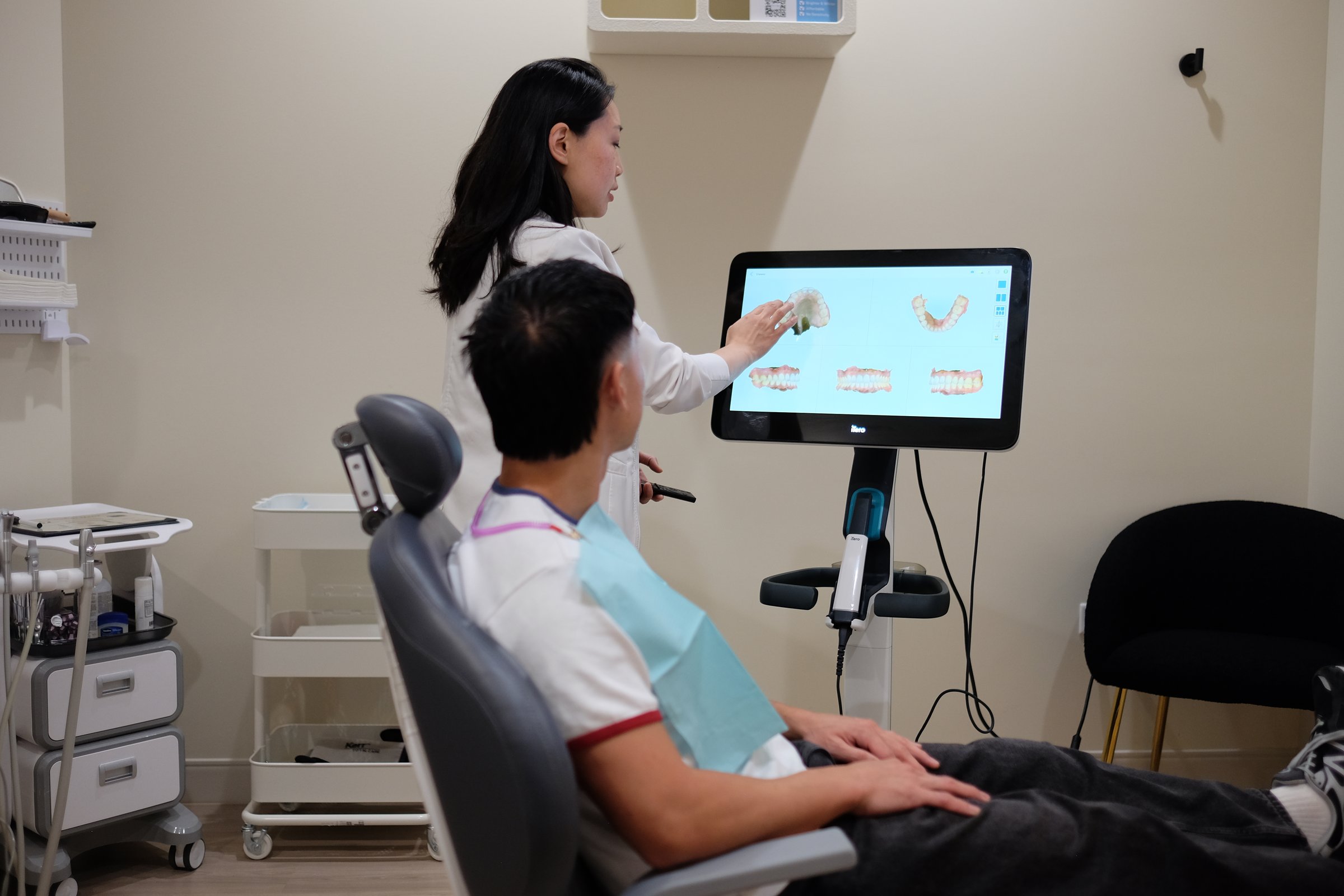
Treatment starts with a 3D scan of your teeth. The scan is used to plan how each tooth will move, in small stages, and a clear aligner is made for every stage. Each aligner is shaped slightly differently from the one before, so wearing it puts gentle, steady pressure on the teeth it's moving.
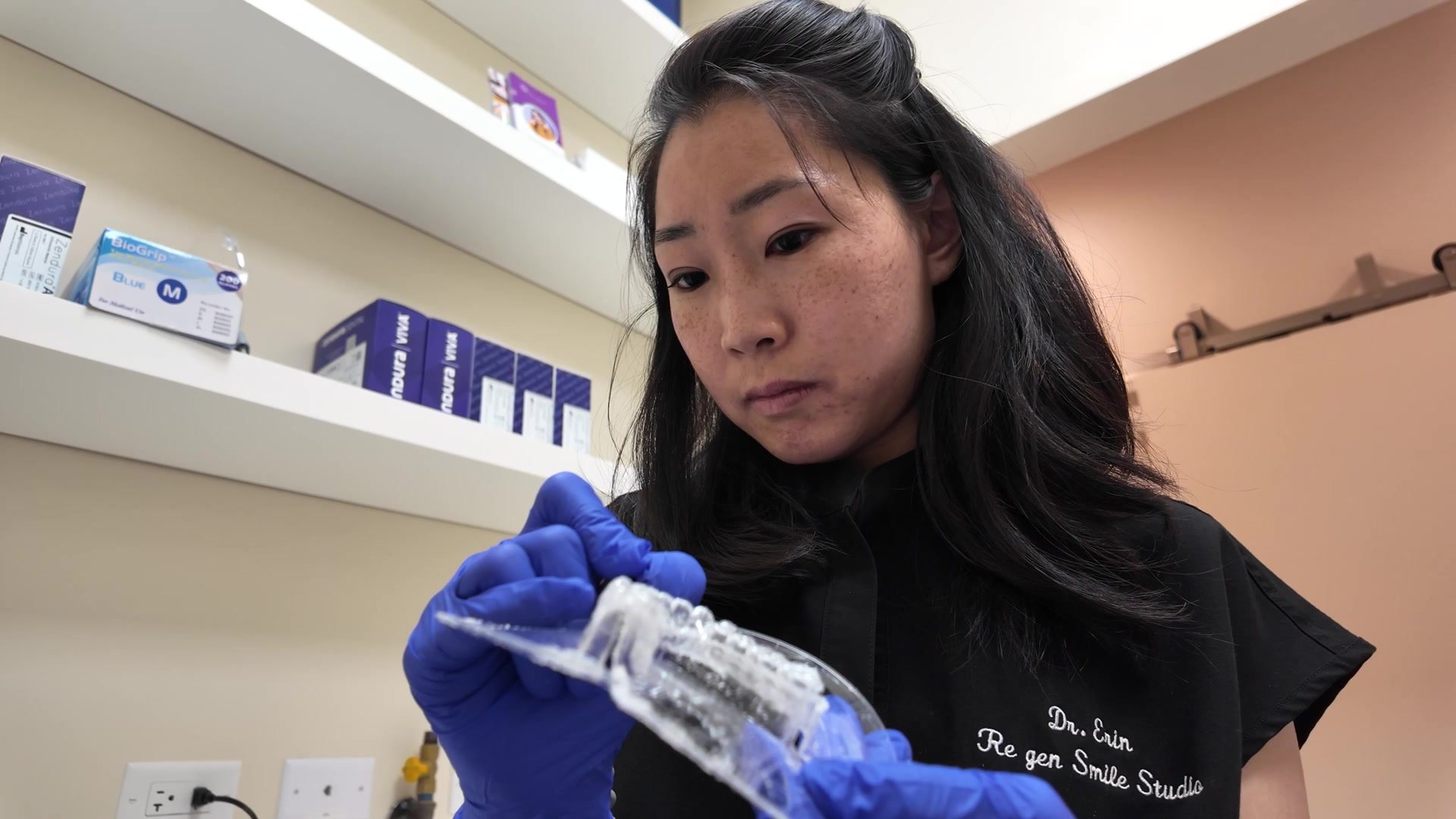
You switch to the next aligner on a set schedule, usually every week or two. Some teeth get small tooth-colored bumps, called attachments, bonded to them. They give the aligner something to grip so it can turn or lift a tooth, and they're polished off at the end.
Aligners only move teeth while they're in your mouth. Most plans ask for 20 to 22 hours a day, so they come out to eat, to drink anything but plain water, and to brush.
Aligners suit adults who want straighter teeth and will wear them most of the day. Because you can take them out, they depend on you more than braces do. If you know the trays would end up in a drawer, braces may serve you better.
Moving teeth puts strain on the gums and bone that hold them, so your mouth needs to be healthy first. Before we plan a single tooth movement, we check your gums, your bite and any wear from grinding or clenching. A problem found now is treated before it can get in the way of your aligners.
“What meant the most was that she referred her mom while she was visiting from out of town. That kind of trust is everything.”
It depends on how far your teeth need to move. A small correction, like one tooth that has drifted, can take a few months. Fuller cases often take a year or longer. You'll get an estimate once your plan is made. Teeth don't all move at the same speed, so it can change as you go.
The part you control is wear time. Aligners left out for long stretches fall behind the plan, and you may need extra aligners, called refinements, to finish.
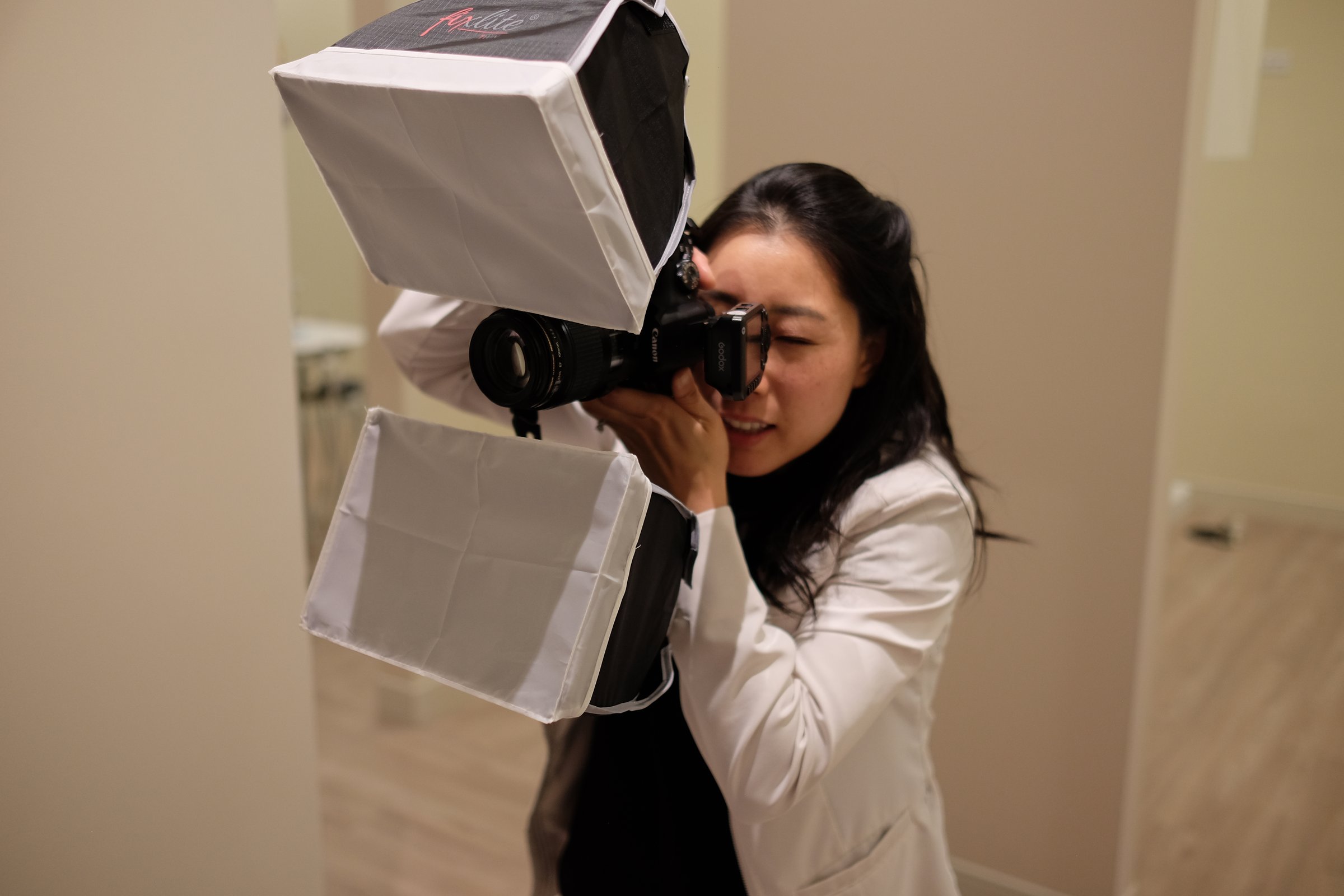
So you can see how far your teeth have come
“One of my favorite parts of the day is taking photographs.” Dr. Erin Cho
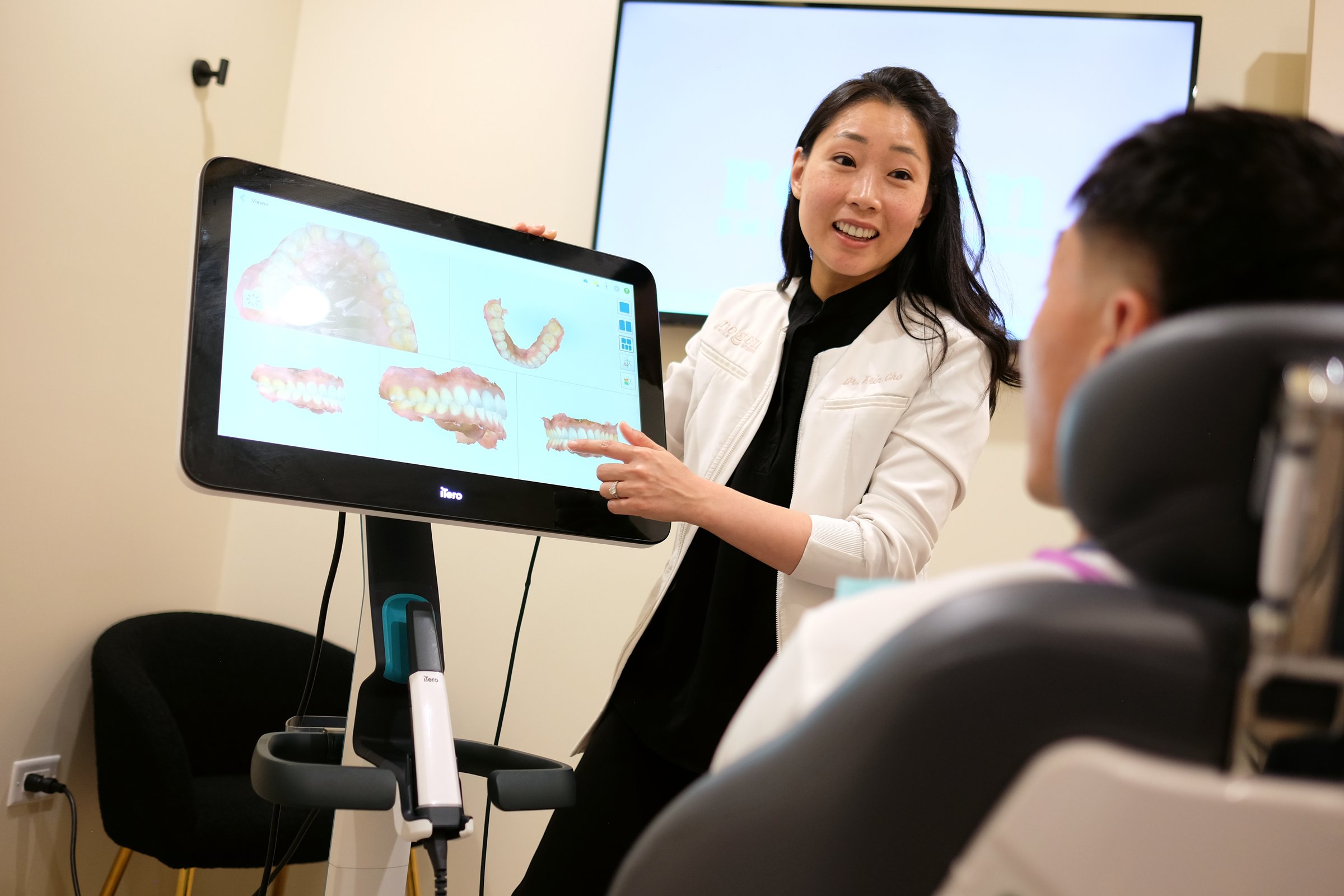
So you know where your teeth are headed before you start
“When I put a photo up, people usually go quiet. Then they start asking clearer questions because now they can actually see it.” Dr. Erin Cho

Ask whenever something comes up
“She was there for me any time I had a question about it, and she was always happy to help.” Suri Kim, in a Google review
Each new aligner feels tight for a day or two. That pressure is the teeth starting to move, and it fades. Some people switch to a new aligner at bedtime so they sleep through the tightest part. Your s's may sound a little lispy for the first few days, until your tongue gets used to the plastic.
Take the aligners out to eat and to drink anything but plain water, and brush before you put them back. Otherwise food and sugar sit against your teeth for hours. Rinse the aligners and brush them gently each day, and keep them in their case when they're out. A napkin on a restaurant tray is where a lot of aligners get lost.
Yes. Many people expect their teeth to stay put once treatment ends, and they don't. Teeth drift back toward where they started, fastest in the first year and slowly for the rest of your life. A retainer holds them in place. Most people wear one at night for the long term.
Teeth that line up are easier to brush and floss. If you're also thinking about veneers or bonding, this is usually the point to plan them, once the teeth are where they'll stay.
The cost depends on how much movement you need and how long treatment takes, so it's worked out once your plan is made. You'll see the plan and the cost before anything begins.
Some dental plans include orthodontic benefits that can apply to aligners. We're in network with most PPO plans. We make using your dental benefits simple. Contact us and our team will be happy to help you understand what your plan may cover.
“I came here for fillings and invisalign, it's been great for millions of reasons! Doctor Erin truly cares about her patients, and she is very honest and warm hearted.”
Our founder, Dr. Erin Cho, and Dr. Ashley Choi, both trained at the University of Illinois Chicago.
Meet our team
3208 N Lincoln Ave, Lakeview. Open Tuesday to Friday, with street parking nearby.
About the studioSomething else on your mind? Call (312) 584-0707
Usually a few months to a year or more. It depends on how far your teeth need to move, and you'll get an estimate once your plan is made.
Not much. Most people feel pressure or mild soreness for a day or two with each new aligner, and there are no wires or brackets to rub your cheeks.
Usually 20 to 22. Take the aligners out to eat, to drink anything but water, and to brush.
No. Take the aligners out to eat and drink, then brush before you put them back so food isn't trapped against your teeth.
It depends on your teeth. Aligners are nearly invisible and removable, which many adults prefer. Braces can handle more complex movement and don't rely on you wearing them.
Yes. Teeth drift back after treatment. A retainer, usually worn at night, holds them where they are.
Usually not. Teeth can be moved at any adult age, as long as the gums and bone around them are healthy, which is why they're checked first.
Sometimes. Some plans include orthodontic benefits that can apply to aligners. We make using your dental benefits simple. Contact us and our team will be happy to help you understand what your plan may cover.
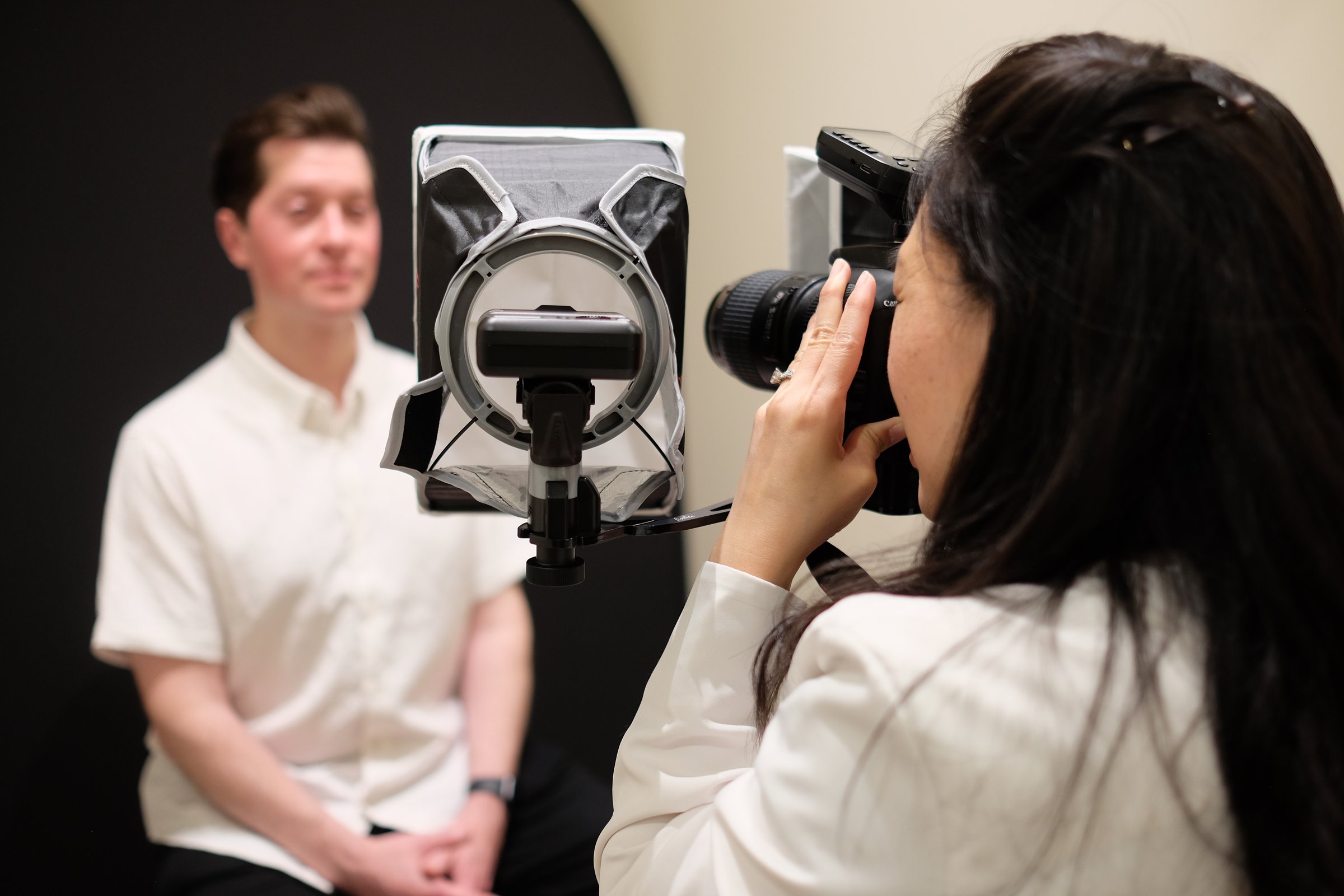
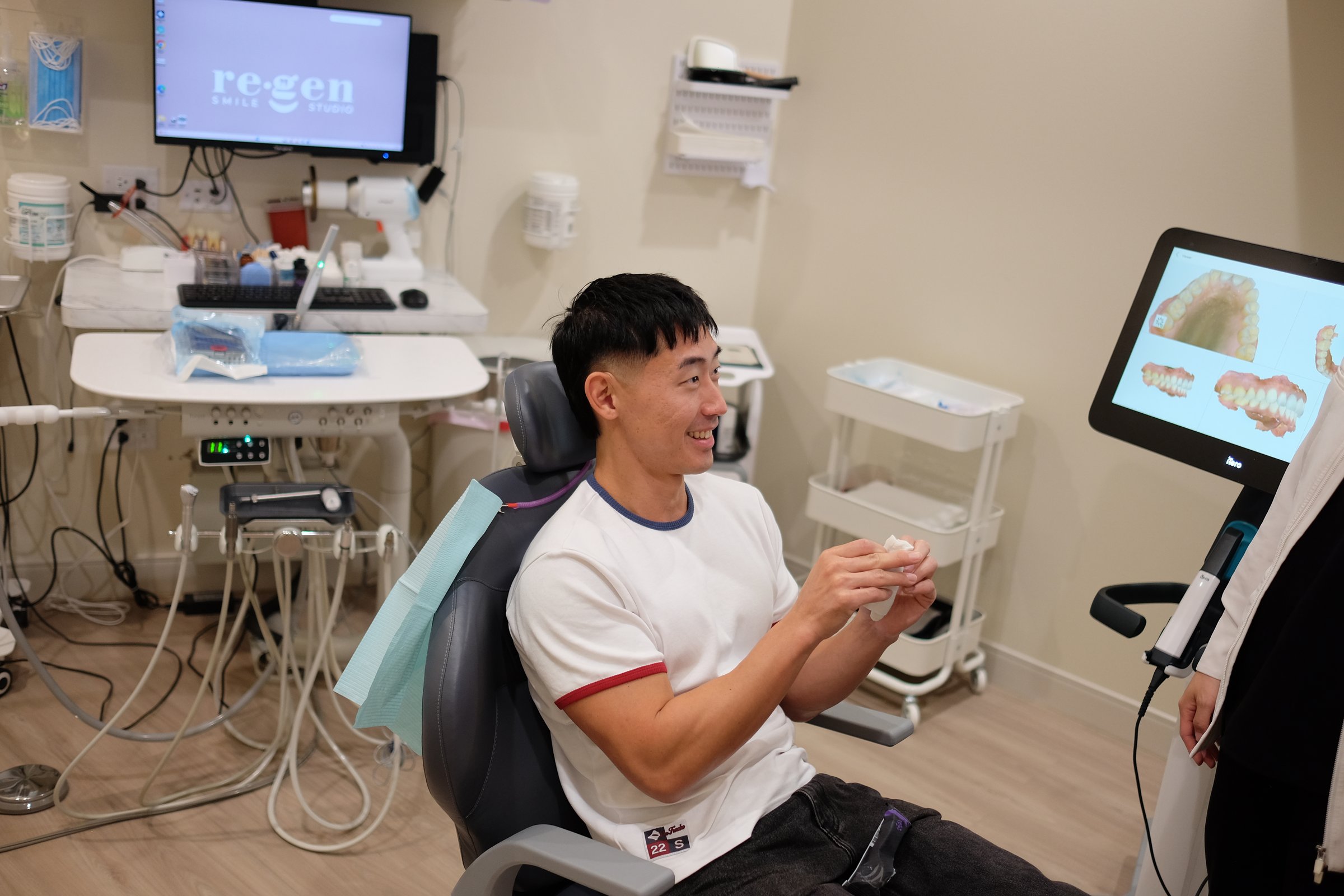
Start with a consultation. We'll look at your teeth and gums, take photographs and a scan, and talk through whether aligners are the right fit, before you commit to anything.