


Our dentists
Our founder, Dr. Erin Cho, and Dr. Ashley Choi, both trained at the University of Illinois Chicago.
Meet our team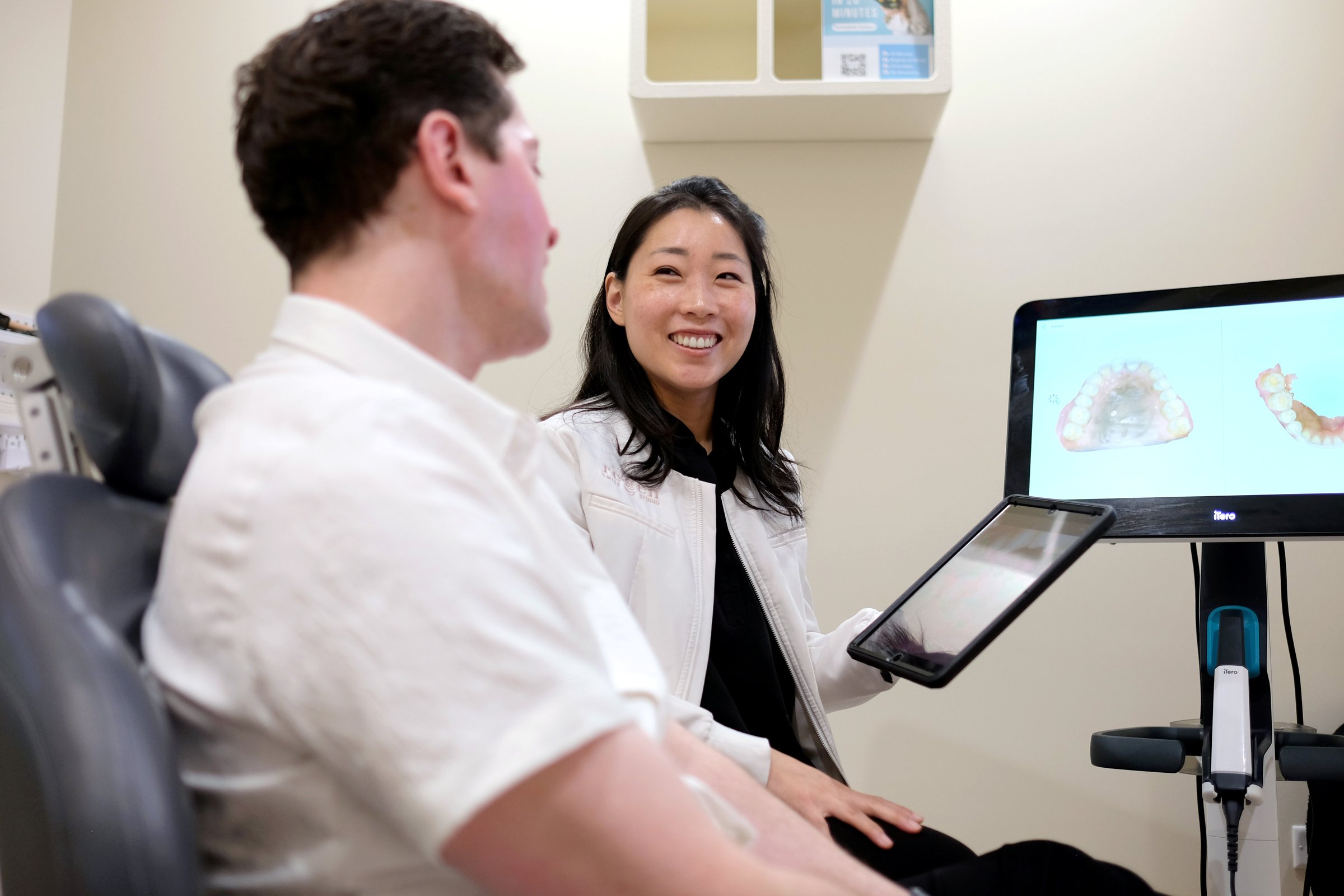
What PRF is in dentistry, how it's made from a small sample of your own blood, and when it's used to help a mouth heal.
You're having a tooth out, a bone graft or an implant, and the plan mentions PRF. It involves a small blood draw from your arm, which can sound like a lot for a dental visit. PRF dentistry is less unusual than it sounds. Your own blood is spun down into a soft gel and placed where the gum or bone needs to heal.
Re·gen is a new kind of regenerative dental studio in Lakeview, Chicago. We pay close attention to how your gums and bone heal after a procedure, because that healing decides how well the work holds up. Dr. Erin Cho has additional training in bone regeneration with PRF. Below is what it is, how it's made, how it differs from PRP, and when it's worth adding.
“Re·gen was inspired by the part of dentistry that feels most meaningful to me: helping people heal and stay well over time.”
PRF stands for platelet-rich fibrin. Platelets are the cells in your blood that start the repair of a wound. They carry growth factors, the signals your body uses to rebuild tissue. Fibrin is the mesh that forms when blood clots, and it holds the platelets in place.
Concentrated together, they make a soft, jelly-like material that can be placed in an extraction socket, mixed into a bone graft or laid over a surgical site. It stays where it's put and releases those growth factors over several days, while the area heals.
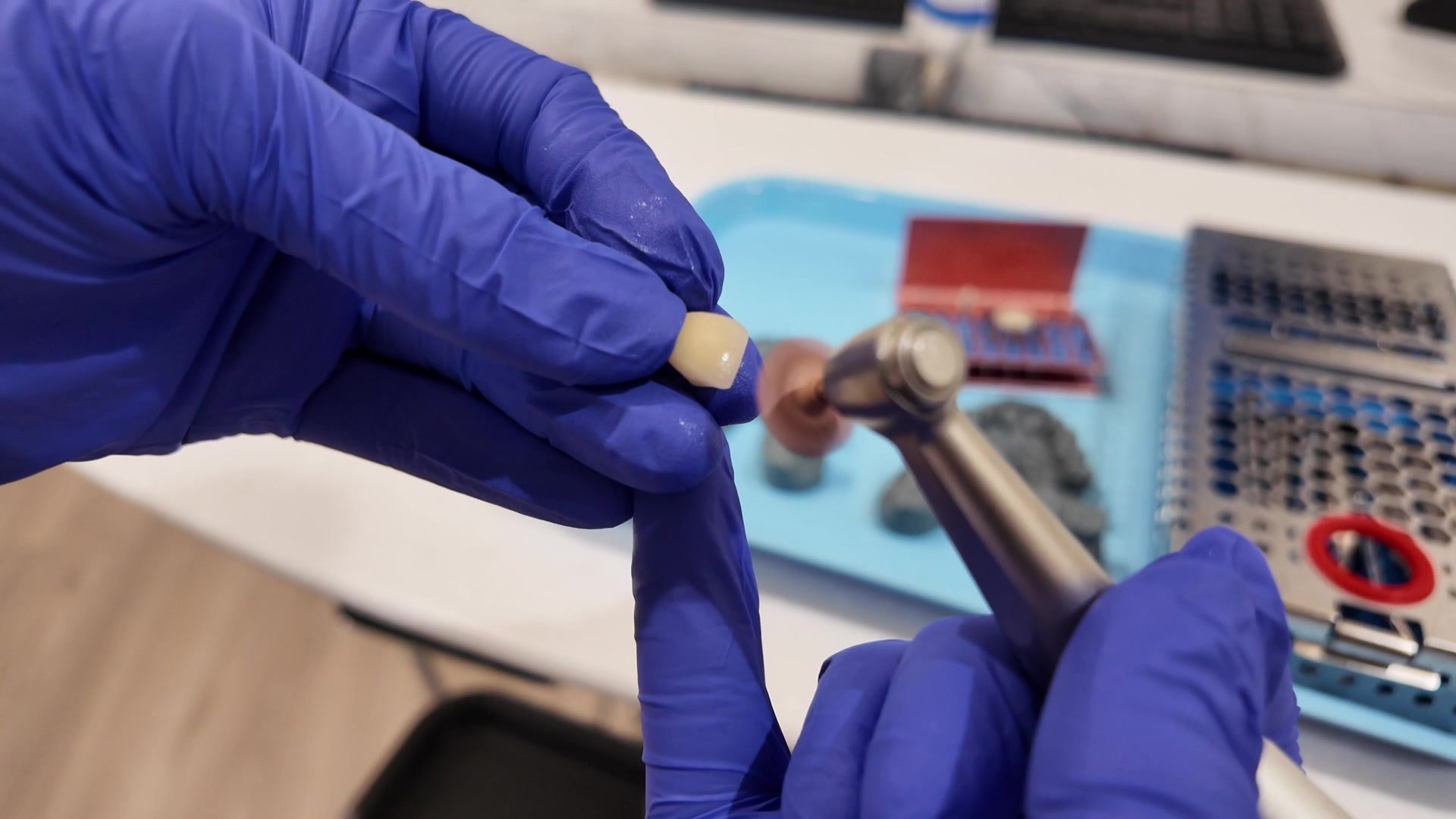
It starts with a blood draw from your arm, much like a routine blood test, and only a few small tubes are needed. The tubes go into a centrifuge, a machine that spins them fast enough to separate the blood into layers. The layer rich in platelets and fibrin is lifted out and shaped, then placed in the treatment area during the same procedure.
Nothing is added to it. It's your own blood, so there's no donor material involved and nothing for your body to reject.
PRF is most often used where bone or gum has to heal after surgery. That includes tooth extractions, wisdom teeth, bone grafts, dental implants and gum grafts. In an empty socket, it helps the clot hold. In a graft, it binds the material together and brings growth factors into the area.
It isn't a shortcut, and it isn't needed for every procedure. We use newer therapies like PRF when they're appropriate, never in place of the basics, so if it's in your plan, you'll know what it's there to do. Before planning a graft or an implant, we also look at why the tooth or bone was lost, whether it was the bite, grinding or the gums, so the area you're healing isn't up against the same problem.
Both come from your own blood. PRP, platelet-rich plasma, is the older method. It's a liquid, and it usually needs an additive to stop the blood clotting while it's prepared.
PRF is spun at a gentler speed with nothing added. It keeps the fibrin, so it forms a gel that stays in place, and it releases its growth factors more slowly. It has become the more common choice in dental surgery, where the material has to sit in a socket or graft for days.
“I'm also drawn to regenerative approaches. For example, I'm incorporating newer therapies that support healing and tissue health when it's appropriate. But I always start with the basics: biology, evidence, and what's safest for you.”
Our founder, Dr. Erin Cho, and Dr. Ashley Choi, both trained at the University of Illinois Chicago.
Meet our team
3208 N Lincoln Ave, Lakeview. Open Tuesday to Friday, with street parking nearby.
About the studioSomething else on your mind? Call (312) 584-0707
A healing gel made from a small sample of your own blood. It's placed in an extraction socket, a graft or an implant site while it heals.
Yes, for most people. It's your own blood with nothing added, so there's no donor material and no allergy to it. The blood draw carries the same small risks as any blood test.
Only briefly. It's a quick pinch in the arm, like a routine blood test, and only a few small tubes are taken.
It can help. Research suggests it supports the healing of gum and bone after some procedures, though results vary and careful surgery and aftercare still matter most.
PRF is a gel; PRP is a liquid. PRF keeps the fibrin and has nothing added, so it stays where it's placed and releases growth factors more slowly.
Often not. Many plans treat it as optional even when they cover the procedure. We make using your dental benefits simple. Contact us and our team will be happy to help you understand what your plan may cover.
Ask about PRF at your consultation. We'll explain what it would add to your procedure, and whether it's worth it for you.