


Our dentists
Our founder, Dr. Erin Cho, and Dr. Ashley Choi, both trained at the University of Illinois Chicago.
Meet our team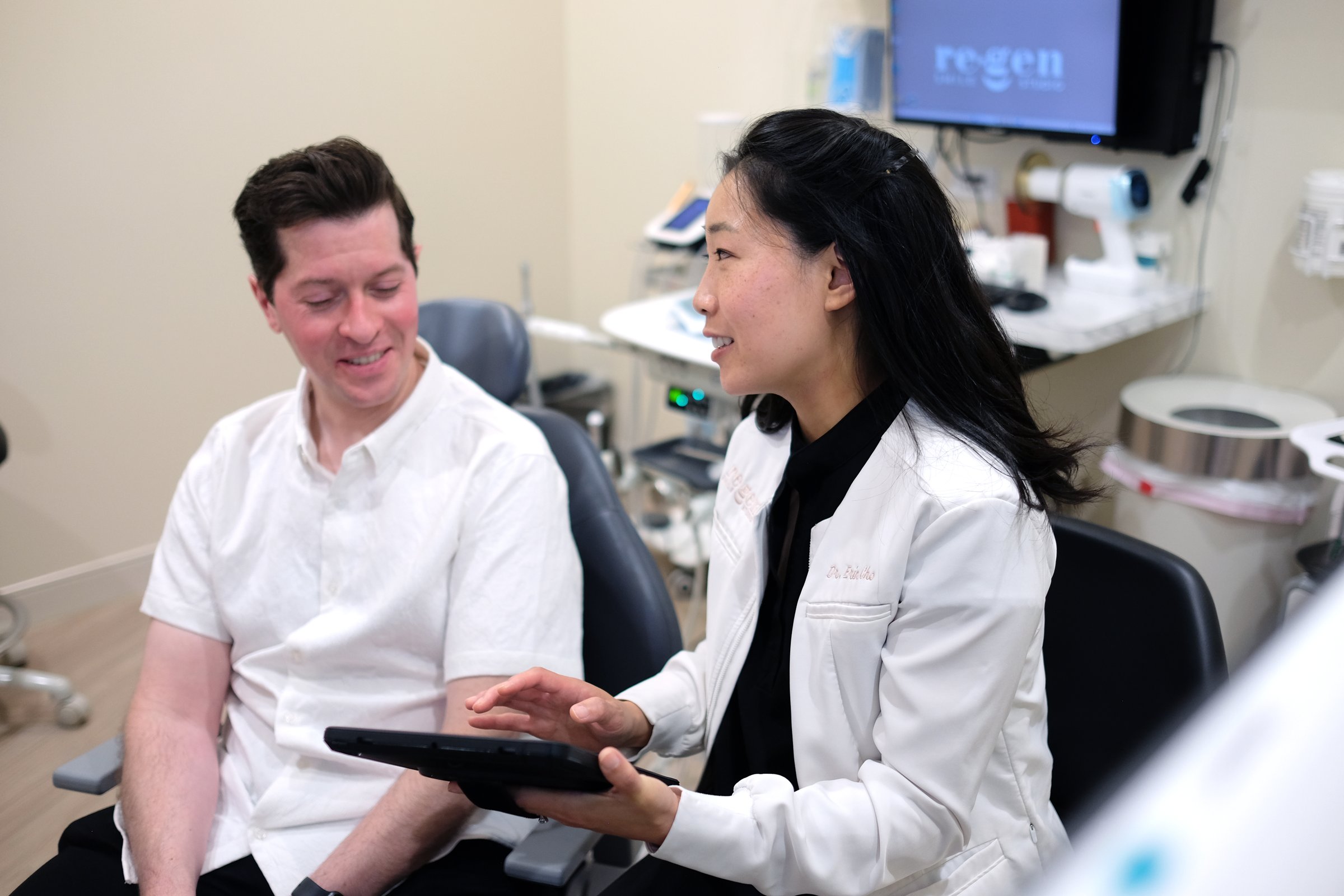
When gum grafting helps receding gums, what happens on the day, and what recovery is like.
Maybe a tooth looks longer than it used to. Maybe cold water makes one spot near the gumline zing, or you can feel a small ridge where the gum ends and the root begins. Those are the usual signs of receding gums. Gum grafting covers the exposed root with new tissue, so it's protected again.
Re·gen is a new kind of regenerative dental studio in Lakeview, Chicago, so the gums get as much attention as the teeth, and recession is more likely to be caught while it's small. Dr. Erin Cho has additional training in gum grafting. Here's what causes recession, when a graft is worth doing, and what healing is like.
“Bleeding gums are a sign that something needs attention. … The goal is to catch it early and get the gums healthy again.”
Gum recession usually creeps up over years. The most common causes are gum disease, brushing too hard, and grinding or clenching. Some people are born with thin gums that recede more easily, and teeth that sit slightly out of line can lose gum on one side.
Brushing harder doesn't clean better. A firm brush scrubbed sideways can wear the gum back over time. Use a soft brush and small, gentle circles, and let the bristles do the work.
Recession matters because the root isn't covered by enamel. It's softer, so it's more sensitive to cold and sweet things, and it decays and wears more easily than the rest of the tooth.
Not always. Receded gum won't grow back on its own, whatever a toothpaste ad suggests. But a small amount of stable recession with no sensitivity often doesn't need a graft. A graft makes sense when the root is sensitive, the gum is thin and still pulling back, a root is at risk of decay, or the gap bothers you when you smile.
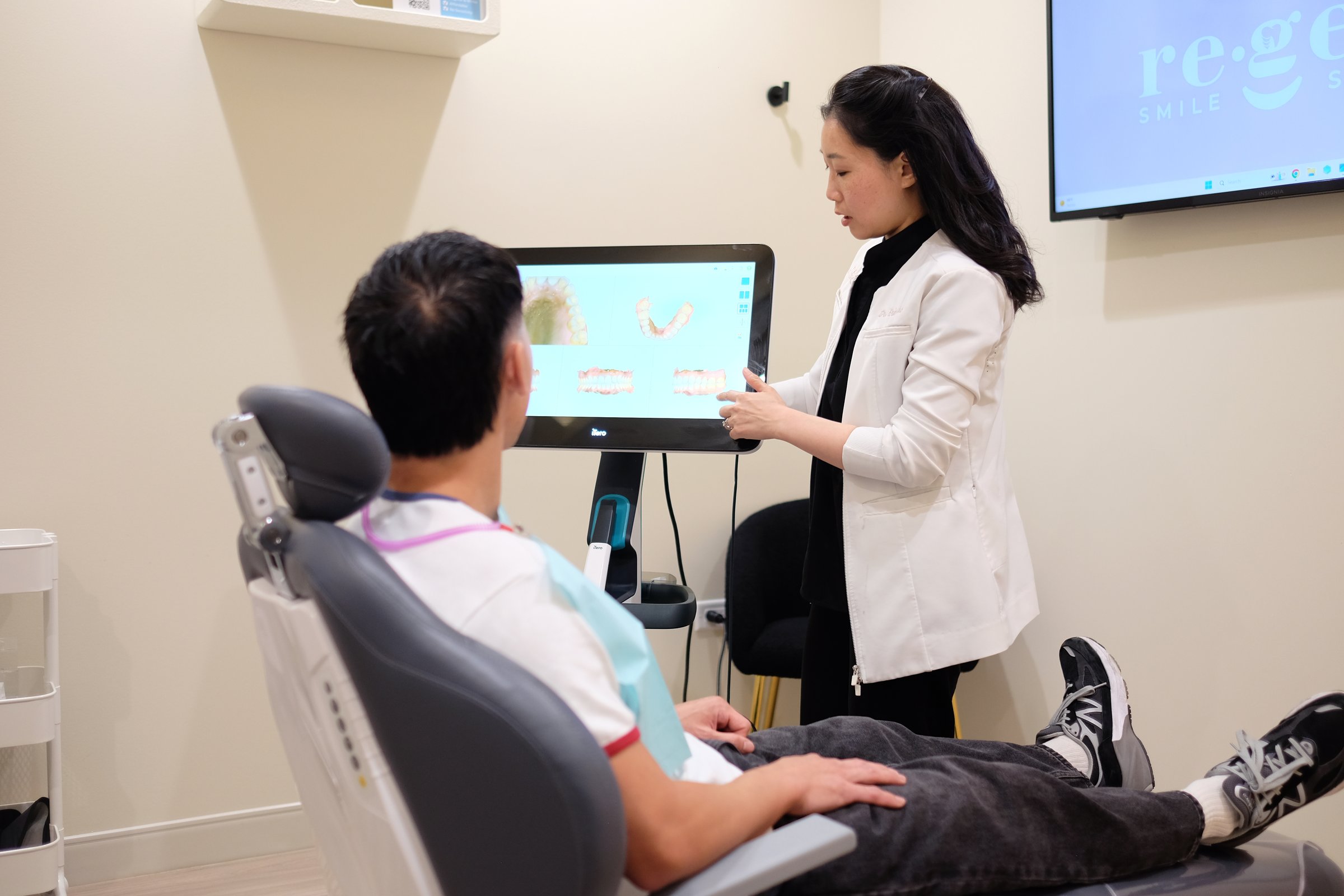
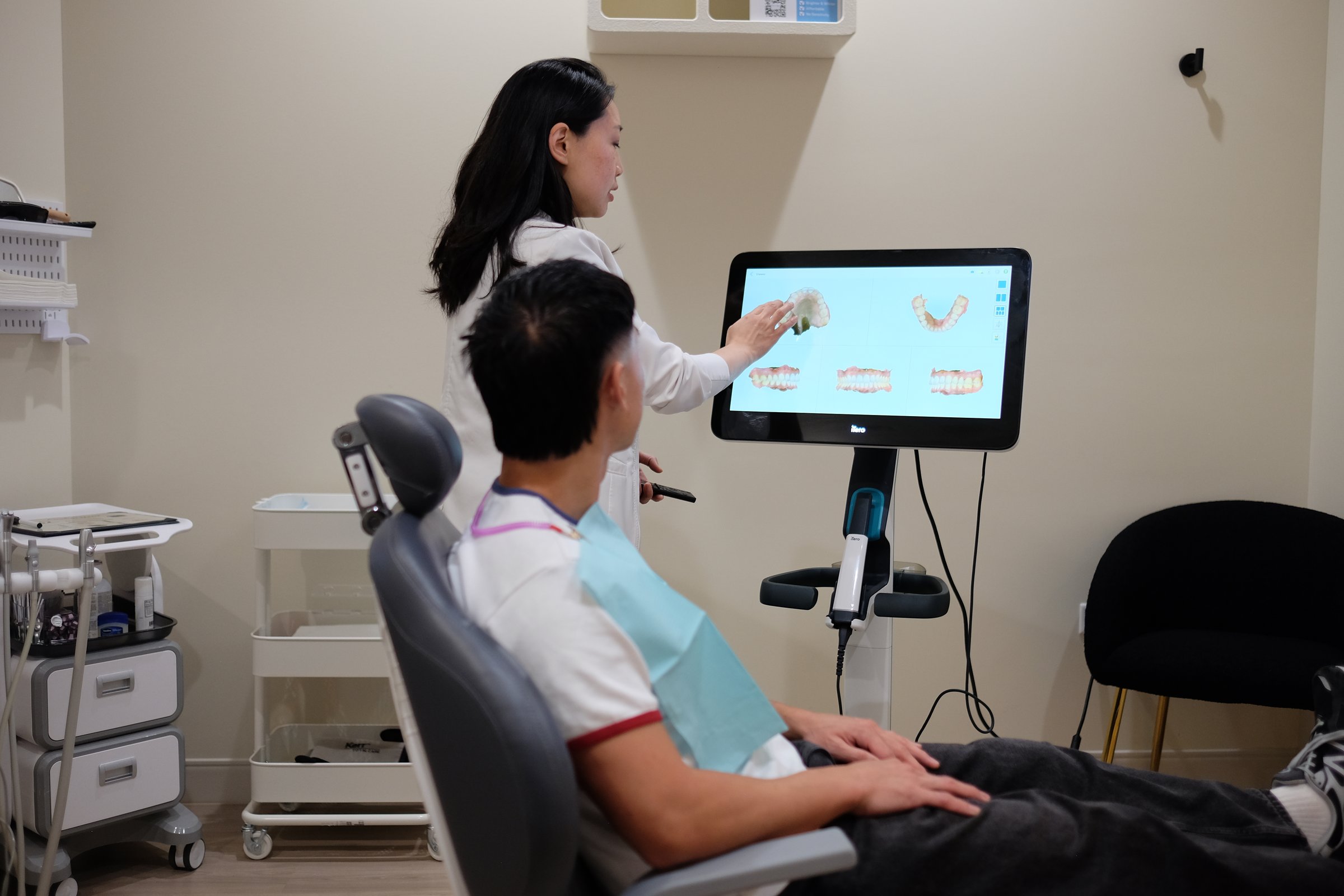
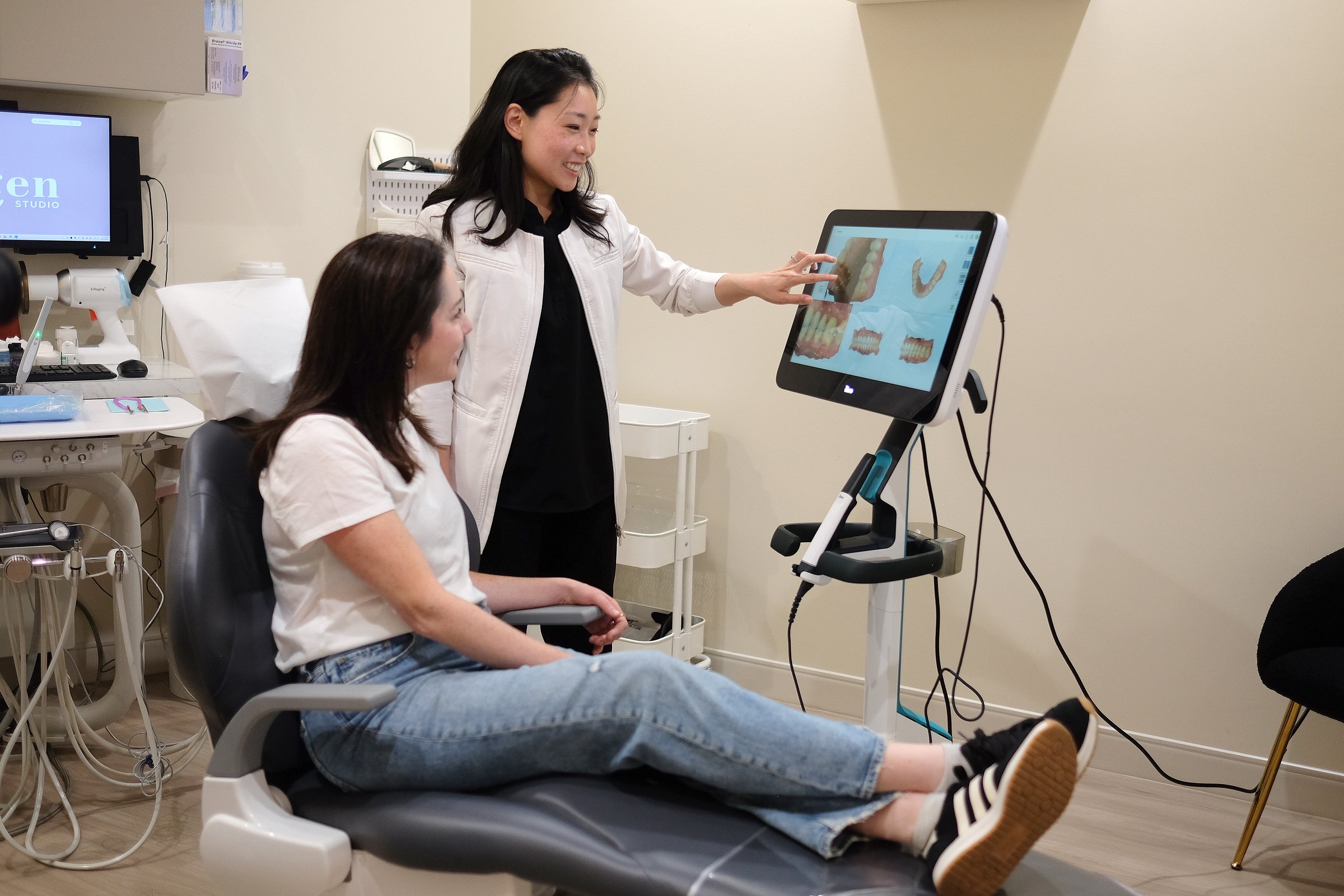
We look for the cause before talking about a graft. That means measuring your gums, checking your bite and habits like grinding, and putting photos of your gums on the screen. Seeing the recession yourself helps you judge whether it's worth treating, and finding the cause means a graft isn't worn back by the same habit. If it's stable, the best plan may be to keep an eye on it, which spares you a surgery you don't need. If gum disease is active, it's treated first, so a graft heals into healthy tissue.
The area is numbed, and the gum around the receded tooth is gently loosened to make room. A thin piece of tissue is placed over the exposed root and stitched in place. Then the gum is settled back over it. For one or two teeth, it usually takes an hour or two.
The tissue can come from a few places. The most common is a connective tissue graft, taken from just under the surface of the roof of your mouth. A free gingival graft takes tissue from the surface of the palate and is used mainly to thicken thin gum. If there's enough healthy gum right beside the tooth, it can sometimes be moved over the root instead. Processed donor tissue is another option, and it means nothing is taken from your palate.
The graft site, and the roof of your mouth if tissue was taken from there, will be tender for several days. An over-the-counter pain reliever usually takes care of it. Most people are back to their normal routine within about a week, and the gum finishes healing over the next few weeks.
For the first week or two, eat soft, cool food and chew on the other side. Don't brush or floss the graft until you're told it's ready, and don't pull your lip out to look at it, because that can tug the stitches. You'll come back so the healing can be checked.
“Dr. Cho is great at addressing all my questions regarding my dental health and ensures that for any of my cleanings, procedures or gum graft, that I am comfortable every step of the way.”
Our founder, Dr. Erin Cho, and Dr. Ashley Choi, both trained at the University of Illinois Chicago.
Meet our team
3208 N Lincoln Ave, Lakeview. Open Tuesday to Friday, with street parking nearby.
About the studioSomething else on your mind? Call (312) 584-0707
No. Once gum has receded, it doesn't grow back on its own. A graft can cover the root, and treating the cause helps stop it getting worse.
Not during it, because the area is numbed. The graft and the roof of your mouth can be tender for several days afterward.
About a week to get back to normal. The gum takes a few more weeks to heal fully.
Soft, cool food for the first week or two, such as yogurt, eggs, pasta and smoothies without a straw. Chew away from the graft.
Often, yes. A soft brush, gentle technique, treating gum disease and a night guard for grinding all slow it down.
Often, at least in part, because a graft is usually done to protect the tooth. We make using your dental benefits simple. Contact us and our team will be happy to help you understand what your plan may cover.
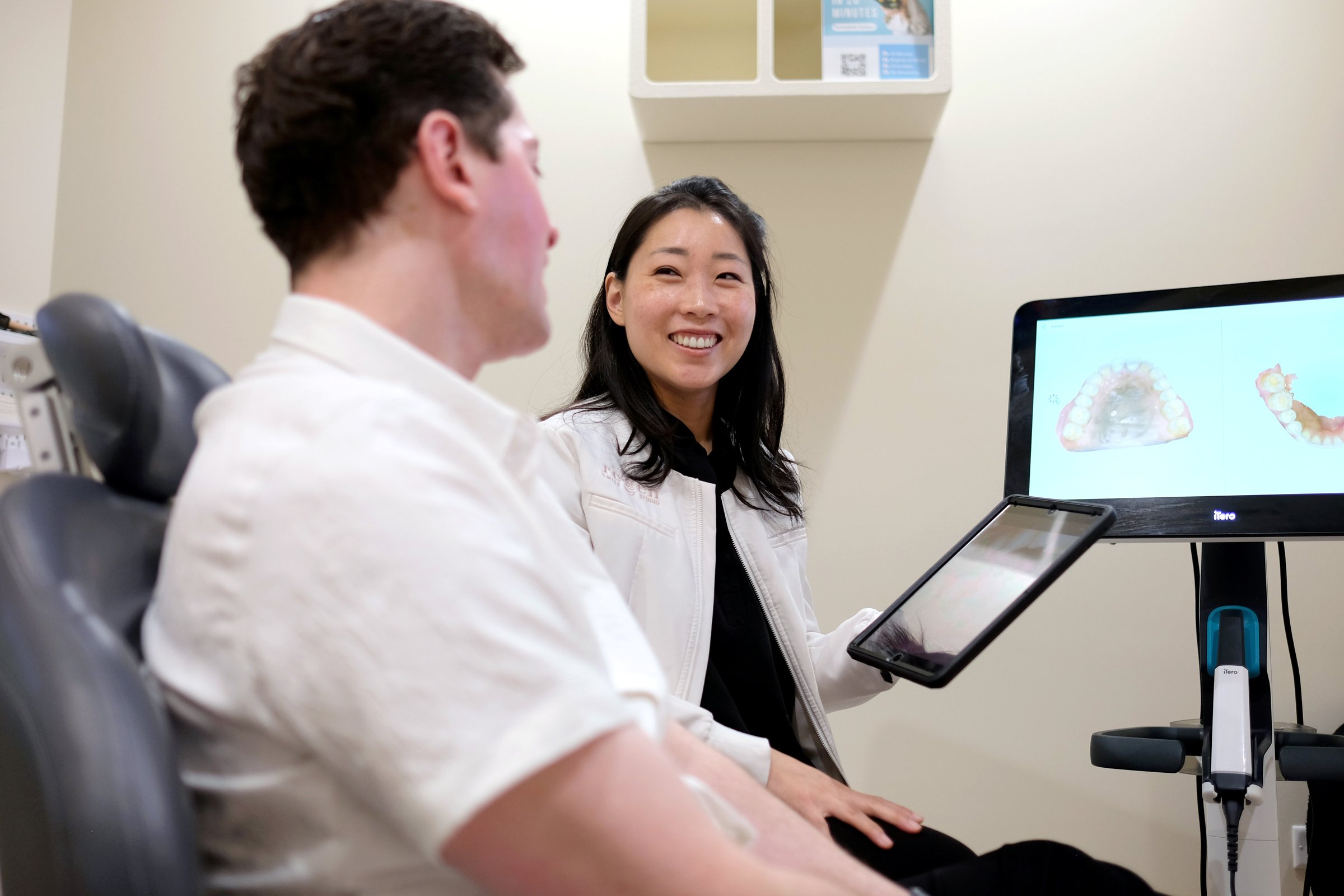
Come in for a look. We'll measure your gums, show you what's happening, and explain whether a graft would help.