


Our dentists
Our founder, Dr. Erin Cho, and Dr. Ashley Choi, both trained at the University of Illinois Chicago.
Meet our team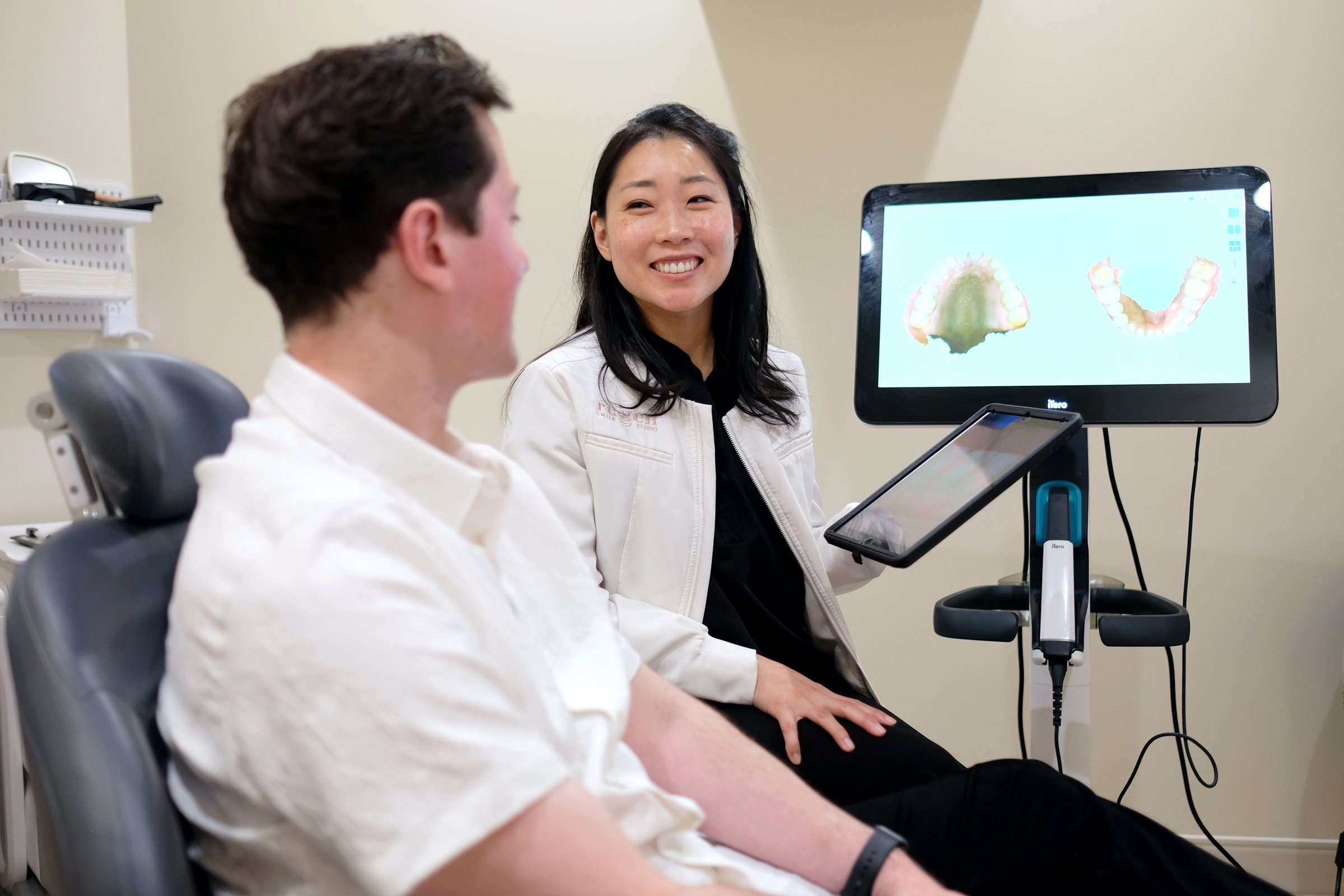
How a custom night guard for grinding protects your teeth and jaw while you sleep, and how to tell if you need one.
Your partner says you grind your teeth at night. Or nobody has said a word, but you wake up with a tight jaw, a dull headache at your temples, or a front tooth that looks a little shorter than it used to. A night guard for grinding protects your teeth from all of that, and we fit custom ones at our Lakeview practice in Chicago.
It's a thin, custom-fitted piece of hard plastic that you wear over your teeth while you sleep. When you grind or clench, your teeth press into the guard instead of into each other. Each one is made from a digital scan of your teeth, so it fits your mouth and no one else's.
“Most often, morning jaw pain comes from clenching or grinding. Sometimes the bite can also be contributing to the tension. What we want to figure out is whether the discomfort is coming more from the muscles, the jaw joint, or a combination of both, because the treatment depends on the cause.”
Grinding, which dentists call bruxism, mostly happens in your sleep, so you're the last to know. A partner may hear it. More often it shows up in the morning as a sore or tired jaw, a headache at the temples, or teeth that feel tender when you bite.
Your teeth keep a record too. Edges go flat and short, small chips appear, fillings keep breaking, and teeth can become sensitive to cold as the enamel wears. Some people notice clicking or tightness in the jaw joint.
At your exam, we work out whether a sore jaw is coming from the muscles, the jaw joint or both. It's hard to believe you grind when you've never heard yourself do it. We'd rather show you. We photograph your teeth and put the photos up on the screen, so you can see the wear for yourself and decide what to do about it.
Not quite. A boil-and-bite guard from the pharmacy is made to fit everyone, so it's thick and loose. Many people chew on it, spit it out in their sleep, or stop wearing it after a week. A soft, poorly fitting guard can even make some people clench harder, and one that only covers some teeth can let others shift.
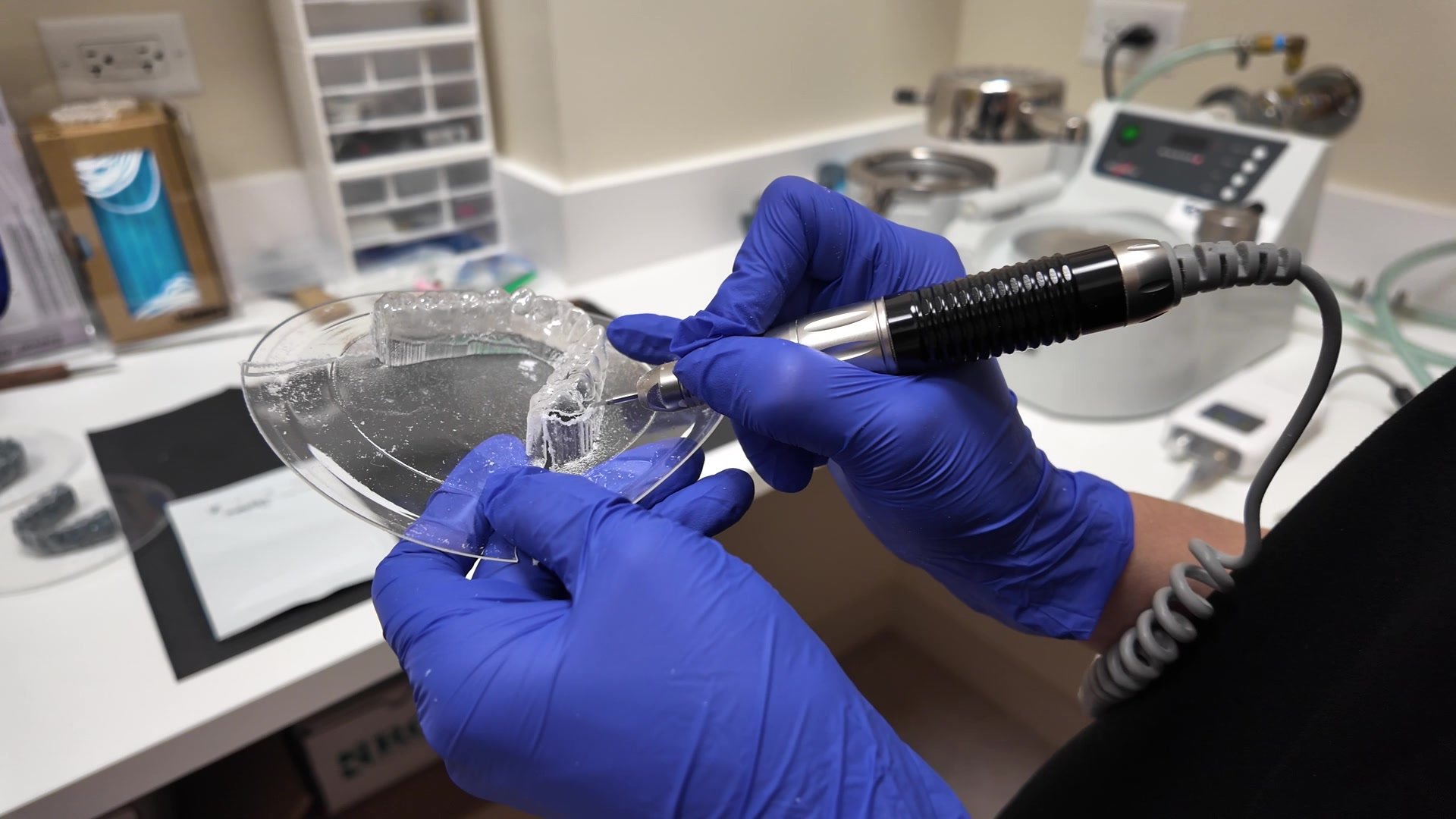
A custom night guard is made from an exact record of your teeth. It's thinner, it stays put, and it's adjusted so your teeth touch it evenly on both sides.
We scan your teeth digitally, so there's no tray of impression putty. A dental lab makes the guard from the scan, which usually takes one to two weeks.
When it's ready, you come back for a short fitting. We check that it snaps on comfortably and adjust it until your bite feels even. Expect it to feel strange for the first few nights. Most people stop noticing it within a week or two.
No, and it isn't meant to. A guard protects your teeth and takes strain off your jaw while the grinding goes on. Most people still grind with it in; they just stop wearing down their teeth.
The grinding itself has causes of its own: stress, poor sleep, sometimes the way your teeth meet. The treatment depends on the cause. If your jaw stays sore with a guard, or the pain seems to come from the joint itself, other care may be needed alongside it.
Our founder, Dr. Erin Cho, and Dr. Ashley Choi, both trained at the University of Illinois Chicago.
Meet our team
3208 N Lincoln Ave, Lakeview. Open Tuesday to Friday, with street parking nearby.
About the studioSomething else on your mind? Call (312) 584-0707
Often, yes. It eases the strain that clenching puts on the jaw muscles and joint. If the pain comes mainly from the joint, other treatment may be needed alongside it.
Usually a few years with good care. Heavy grinders wear through guards faster, so bring yours to your regular visits and we'll check it.
For the first few nights, a little. A thin custom guard is much easier to get used to than a store-bought one, and most people stop noticing it within a week or two.
Yes. Grinding happens most nights for most people, and a guard only protects your teeth when it's in.
Sometimes. Some plans cover part of the cost, especially when grinding has been diagnosed. We make using your dental benefits simple. Contact us and our team will be happy to help you understand what your plan may cover.



Book a visit and we'll look at your teeth, your bite and your jaw, and talk through whether a night guard makes sense for you.