


Our dentists
Our founder, Dr. Erin Cho, and Dr. Ashley Choi, both trained at the University of Illinois Chicago.
Meet our team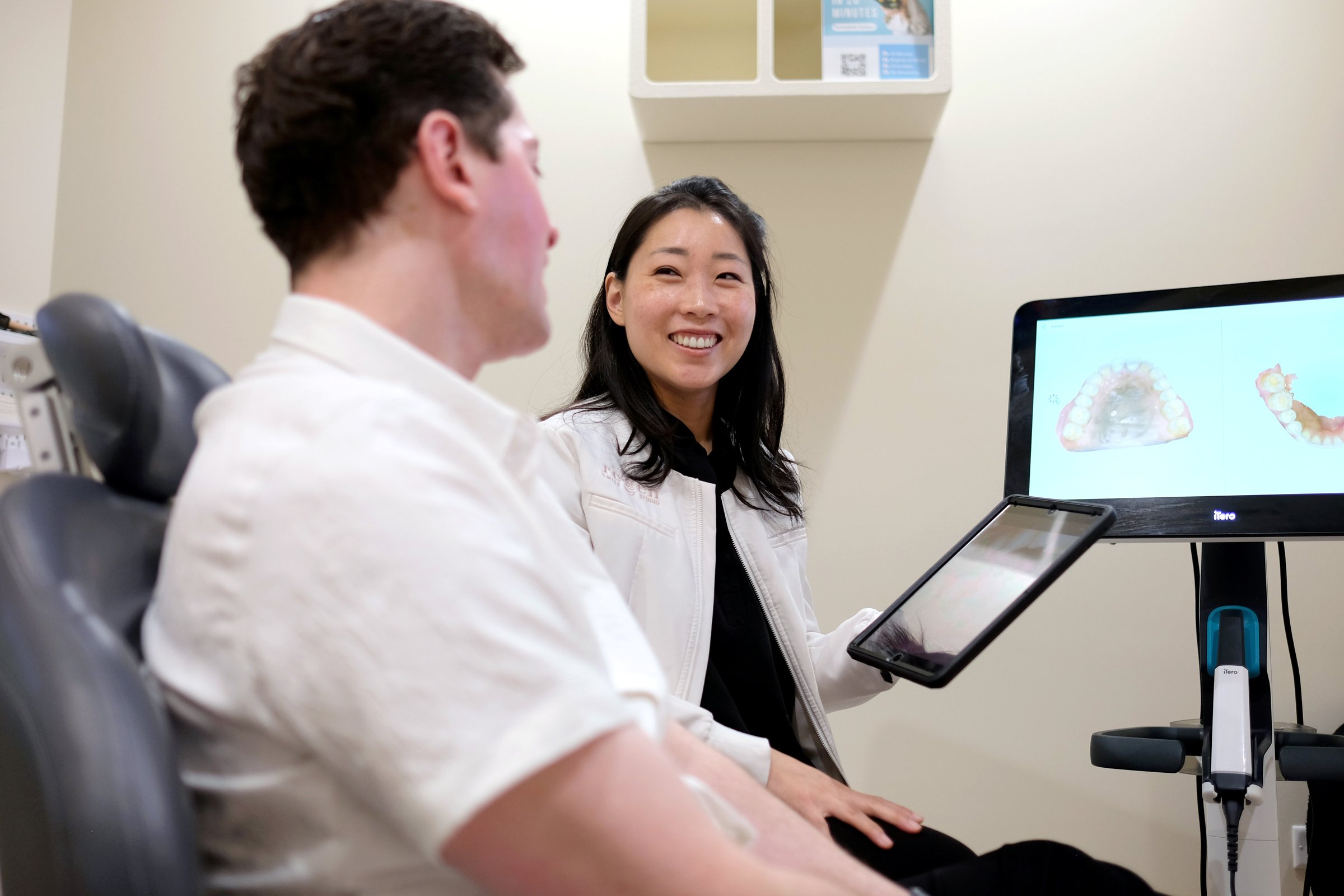
What a full dental exam and a first visit include, and what you'll leave knowing about your own mouth.
Maybe you've just moved to Chicago and need a new dentist. Maybe your last checkup was a few years ago, and now a tooth twinges with cold water or an old filling feels rough under your tongue. Either way, the place to start is a dental exam: a full look at your teeth, gums, bite and jaw, so you know what's healthy and what isn't.
We're a dental studio in Lakeview, on Lincoln Avenue, and we welcome new patients. Below is what the exam covers, what the X-rays are for, and what happens at your first visit.
“If you haven't been to the dentist in a while, take a breath. Coming in and getting started is usually the hardest part.”
More than a hunt for cavities. Each tooth is checked for decay, cracks, chips and wear, and old fillings and crowns are checked to see whether they still seal. Your gums are measured around every tooth. Your bite and jaw joints are checked for signs of clenching or grinding. The tongue, cheeks and throat get a look too, in an oral cancer screening that takes a minute or two and doesn't hurt.
You'll also go over your health history and any medications, because some conditions and medicines show up in the mouth. Mention anything that's been bothering you, even if it seems small. A tooth that only hurts with cold, or a jaw that's stiff when you wake up, tells us where to look.
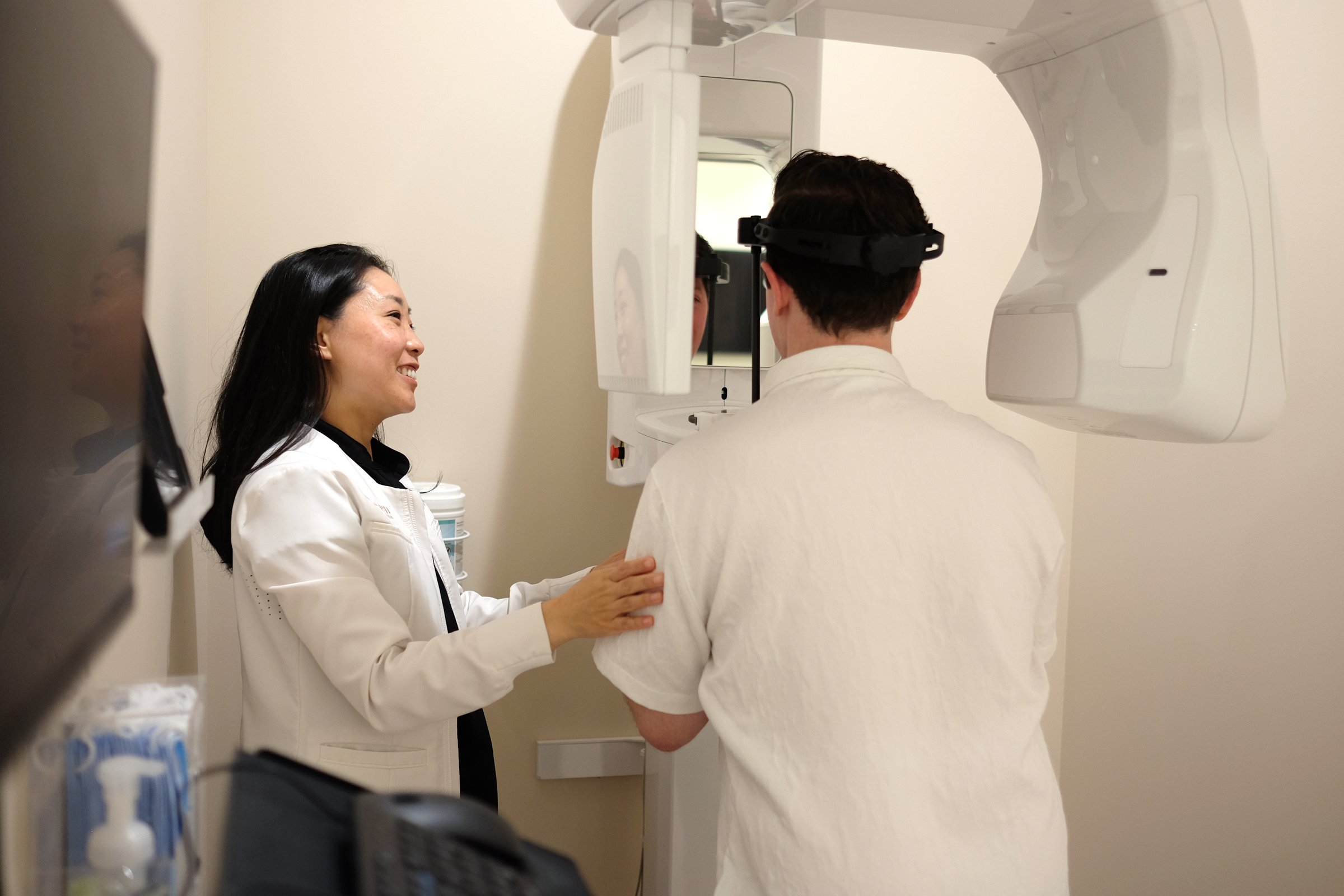
Usually, yes. X-rays show decay between the teeth, infection at the tip of a root, and the level of bone around each tooth. None of that can be seen by looking. A new patient often needs a full set, so there's a clear starting point to compare against later.
We use digital X-rays, which need very little radiation. After the first set, how often you need them depends on your risk of decay and gum disease. If another dentist took X-rays of you recently, bring them or tell us, and we'll ask for a copy.
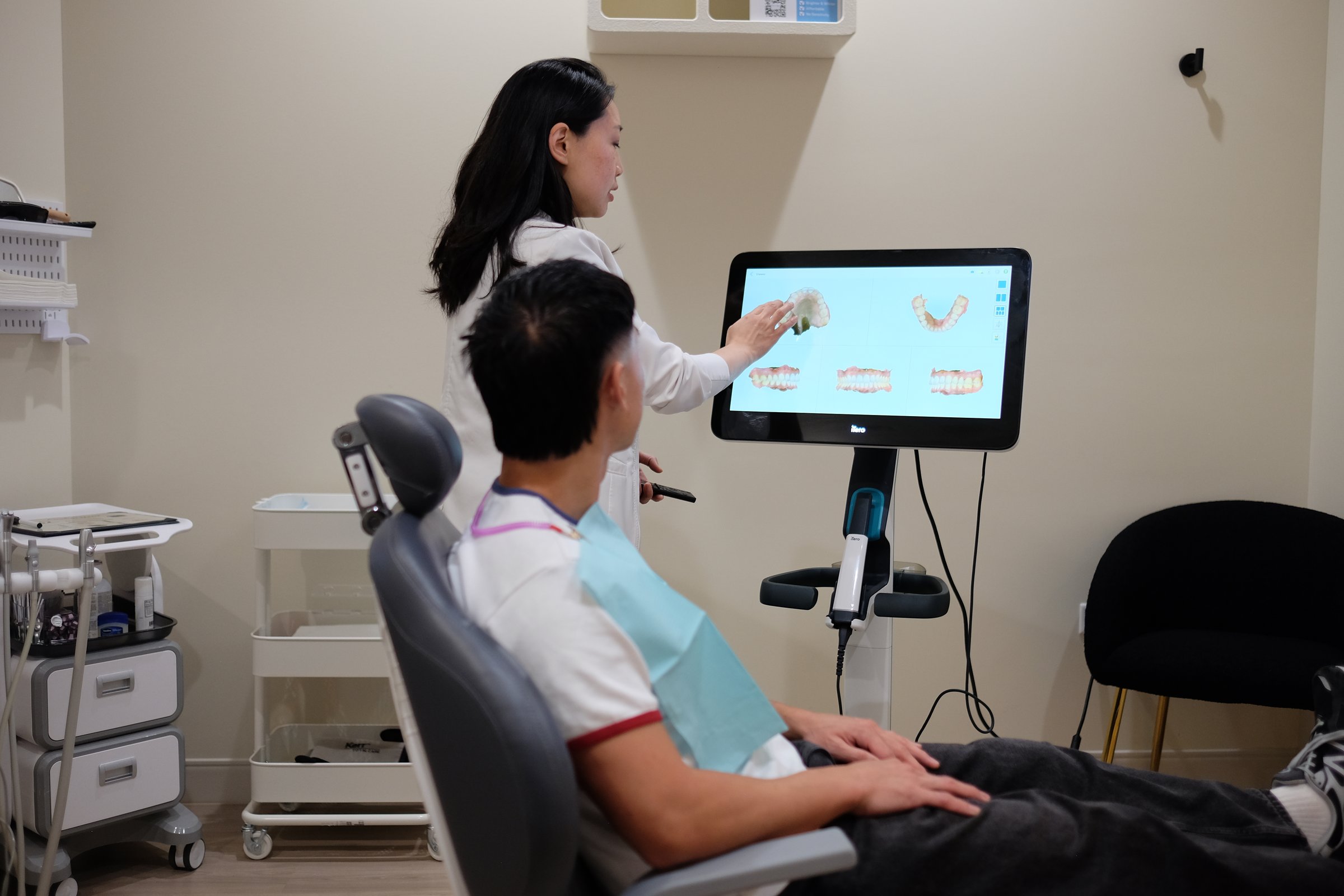
If anything needs treatment, you'll get a plan in order of priority, with the costs, before anything is booked.
Yes. Most dental problems don't hurt until they're well along. A cavity between two teeth can grow for months without a twinge, and by the time it aches it may have reached the nerve.
Gum disease is quieter still. It can get worse for years without much discomfort, and bone lost to it is hard to get back. Bleeding when you brush or floss is one of the few early signs, and it's easy to shrug off. Tell us if your gums bleed, your breath stays bad, a tooth feels loose, or your jaw is sore in the morning.
Because teeth rarely chip, wear or loosen for no reason. A tooth that keeps breaking may be taking too much force from the bite. Gums that pull back on one side can come from brushing too hard, or from clenching at night. Repair the tooth without finding the cause, and you'll often be back to repair it again.
Morning jaw pain is a good example. It most often comes from clenching or grinding, and sometimes the bite adds to the strain. We work out whether the soreness is coming from the muscles, the jaw joint or both, because the treatment is different for each.
When it's appropriate, we also use wellness scans and saliva testing to spot risk early, so small changes can be dealt with gently.
“Even if someone comes in for one tooth, I still zoom out. I want to understand why that tooth got there, looking at the bite, habits, gum health and the health of the whole mouth.”
Not automatically. Small silver fillings can last for decades, and plenty of them are perfectly stable. The bigger concern is a large filling that has replaced a lot of the tooth. What's left around it is thinner, and that tooth is more likely to crack over time.
At your exam, each old filling is checked for its size, its edges, and any cracks in the tooth around it. One that's holding up well can be left where it is. Replacing a sound filling means drilling away more tooth.
With an exam. Plenty of people stay away for years, because of cost, a busy stretch, or a bad experience somewhere else. The exam shows where things stand now.
Dr. Erin likes to “meet you where you are, walk through everything together, and make a plan that feels manageable.” If there's a lot to do, it can be spread over several visits, starting with what matters most. A lot of people leave wondering why they waited so long.
If you're nervous, say so when you book. We slow down, explain each step before it happens, and check in with you as we go.
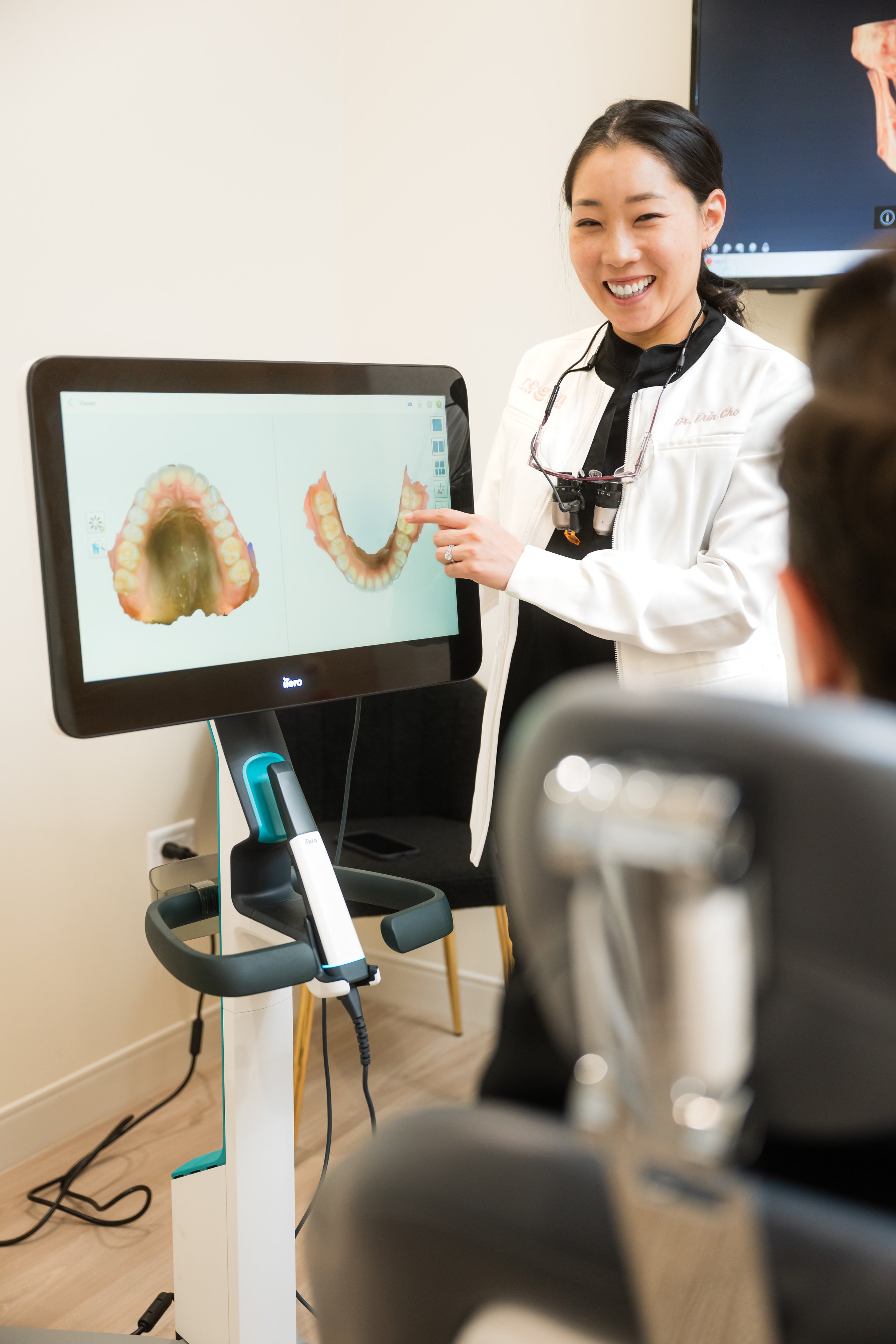
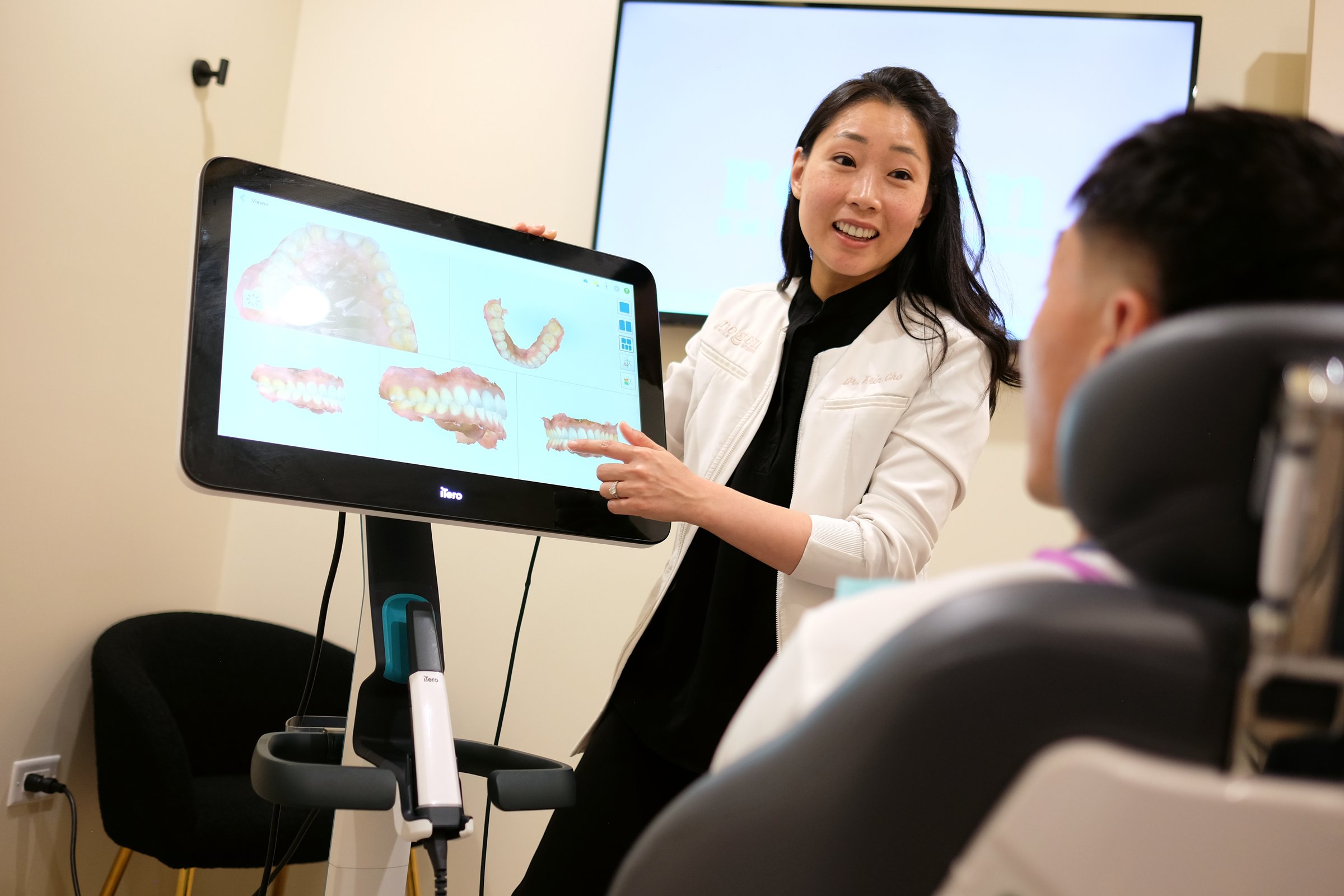
Nothing happens that you haven't seen first
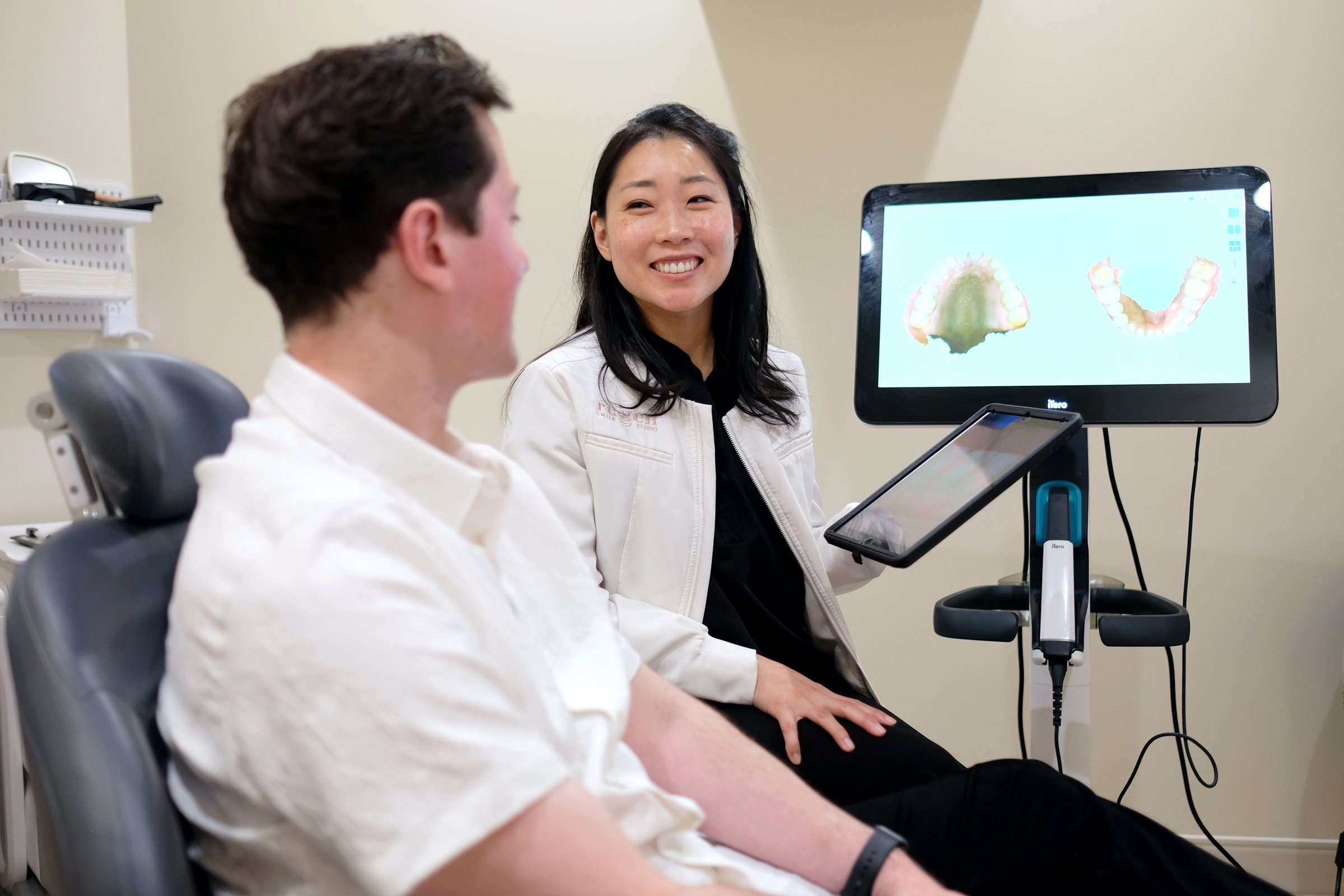
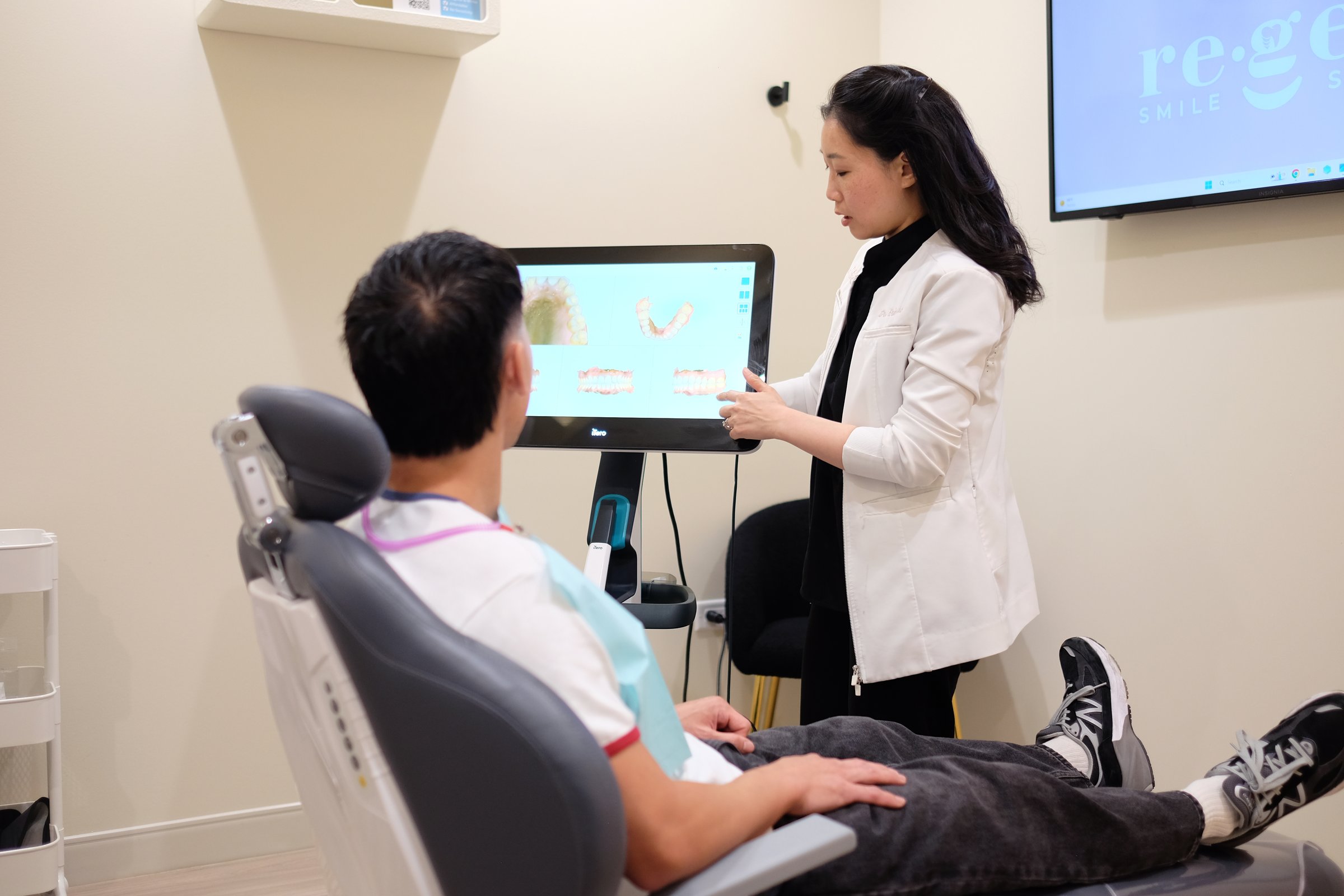
“When I put a photo up, people usually go quiet. Then they start asking clearer questions because now they can actually see it.” Dr. Erin Cho
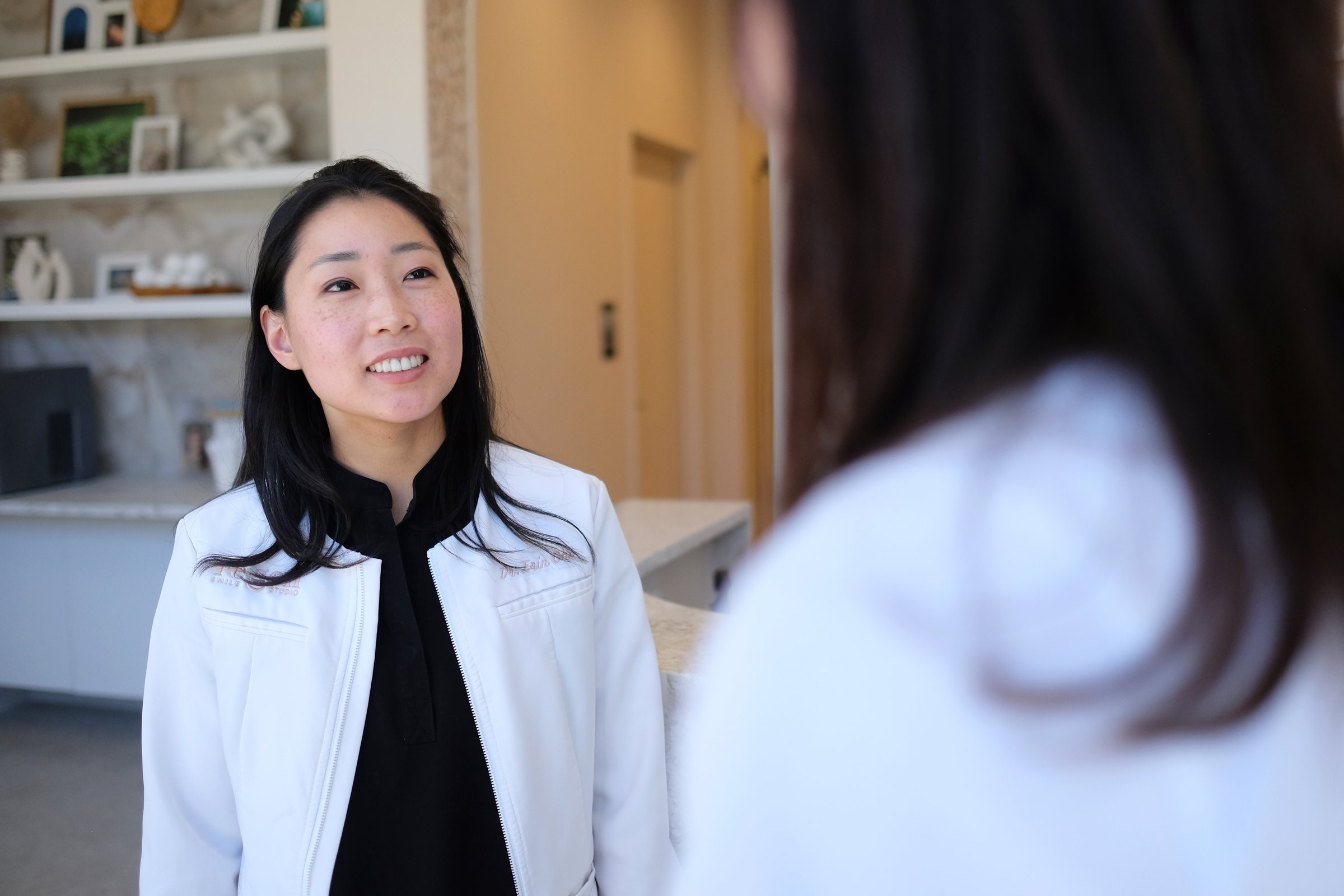
Sometimes the answer is nothing
“After we take a careful look, the best answer is just to keep an eye on things. I never want to make someone feel like we're doing more than is truly needed.” Dr. Erin Cho

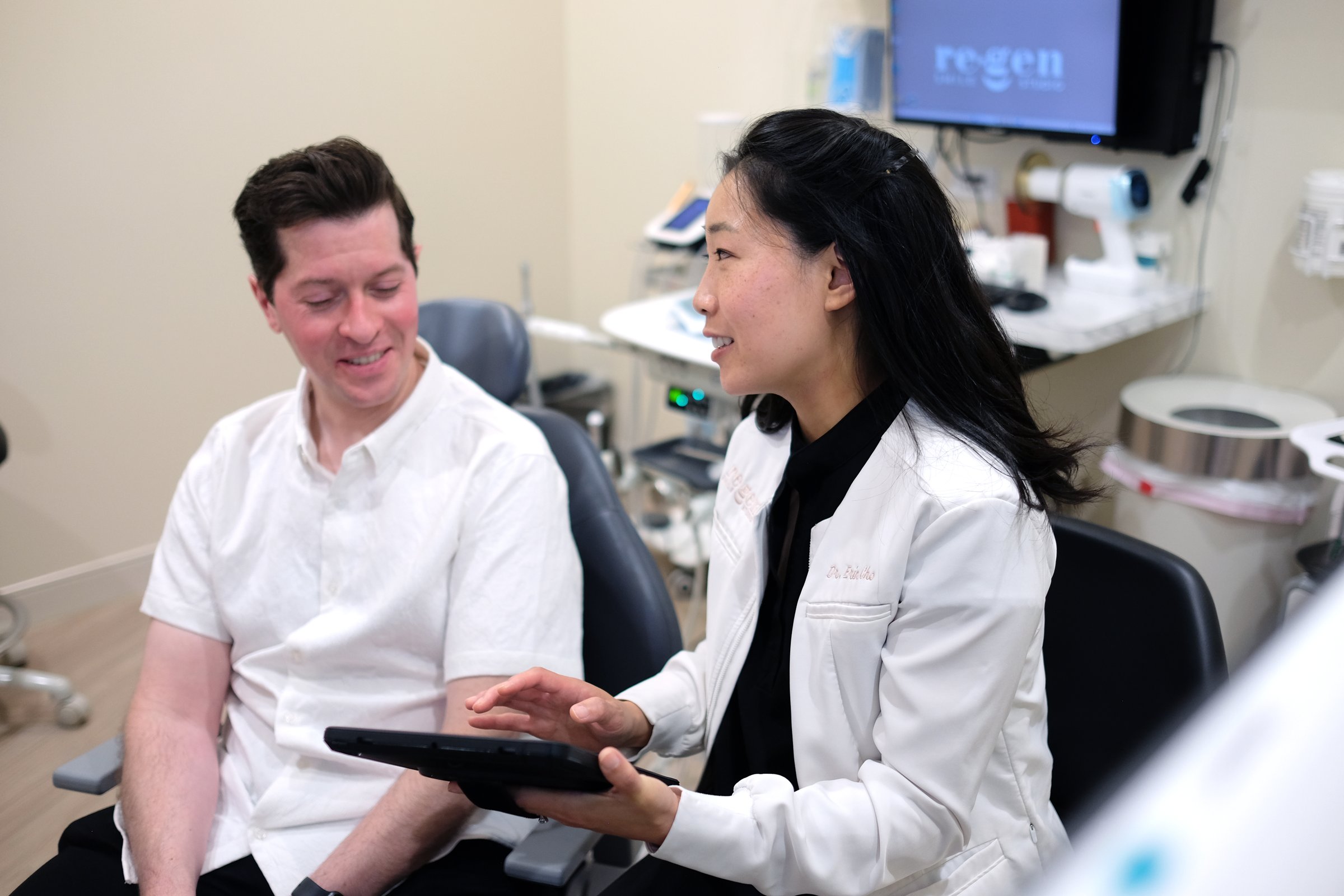
Comfort, and time to ask
“We slow things down. We ask what happened and what matters to them. Then we explain each step clearly, use photos, check comfort.” Dr. Erin Cho
Every six months suits most people, with a cleaning at the same visit. People with gum disease, a high risk of decay, or treatment underway may need to come more often. We'll suggest an interval that fits your mouth.
We're in network with most PPO plans. We make using your dental benefits simple. Contact us and our team will be happy to help you understand what your plan may cover. Most plans count exams, X-rays and cleanings as preventive care.
“Dr Cho took the time to explain everything so that it was easy to understand and not intimidating.”
360+ 5-Star Google Reviews
“Incredibly thoughtful, patient, kind and skilled”
“Dr Erin and her team were incredibly thoughtful, patient, kind and skilled. They really took their time to understand my history and concerns, were gentle in their approach, and clearly communicated the plan.”
 Amanda SaratsisGoogle · Jun 2026
“They actually show you images & x-rays”
“A really nice touch is that they are very transparent with what is being done and why - they actually show you images & x-rays and walk you through what they are seeing.”
 Kory KukukGoogle · Jan 2026
“Finally found a dentist I can trust”
“…she took her time, explained every step in a way that was easy to understand, and made sure I felt at ease throughout the entire visit… I left feeling well cared for and confident that I've finally found a dentist I can trust.”
 A KGoogle · Dec 2025
“One of the most honest, trustworthy dentists I know”
“She is one of the most honest, trustworthy dentists I know. I speak whole heartedly in this manner as the son of a dentist. Dr. Cho will make sure you are taken care of comfortable and never push any unnecessary procedures.”
 Derrick AgnolettiGoogle · Nov 2025
Our founder, Dr. Erin Cho, and Dr. Ashley Choi, both trained at the University of Illinois Chicago.
Meet our team
3208 N Lincoln Ave, Lakeview. Open Tuesday to Friday, with street parking nearby.
About the studioSomething else on your mind? Call (312) 584-0707
A conversation, X-rays and photographs, then the exam itself: your teeth, gums, bite, jaw and soft tissue. Then we show you what we found on the screen and explain what needs care and what can wait.
It varies. It depends on how much there is to look at and whether you have a cleaning the same day. We'll give you an idea when you book.
No. A new patient usually needs a full set. After that, how often depends on your risk of decay and gum disease; for many people it's once a year or less.
Usually, yes. Most people have the exam and a cleaning at the same visit. If the exam finds gum disease or tartar below the gums, a deep cleaning may be planned instead, often at a separate visit.
Yes. Many people come to us after a long gap. We start with an exam, show you where things stand, and make a plan that feels manageable, starting with what matters most.
Most often, clenching or grinding while you sleep. We check whether the soreness is coming from the muscles, the jaw joint or both, because the treatment depends on the cause.
Usually. Most dental plans treat exams, X-rays and cleanings as preventive care. We're in network with most PPO plans. We make using your dental benefits simple. Contact us and our team will be happy to help you understand what your plan may cover.
Your insurance card, a list of any medications, and recent X-rays from another dentist if you have them. Your new patient forms can be filled out online before you arrive.
Request an appointment or call us, and our team will help you schedule your first visit.