


Our dentists
Our founder, Dr. Erin Cho, and Dr. Ashley Choi, both trained at the University of Illinois Chicago.
Meet our team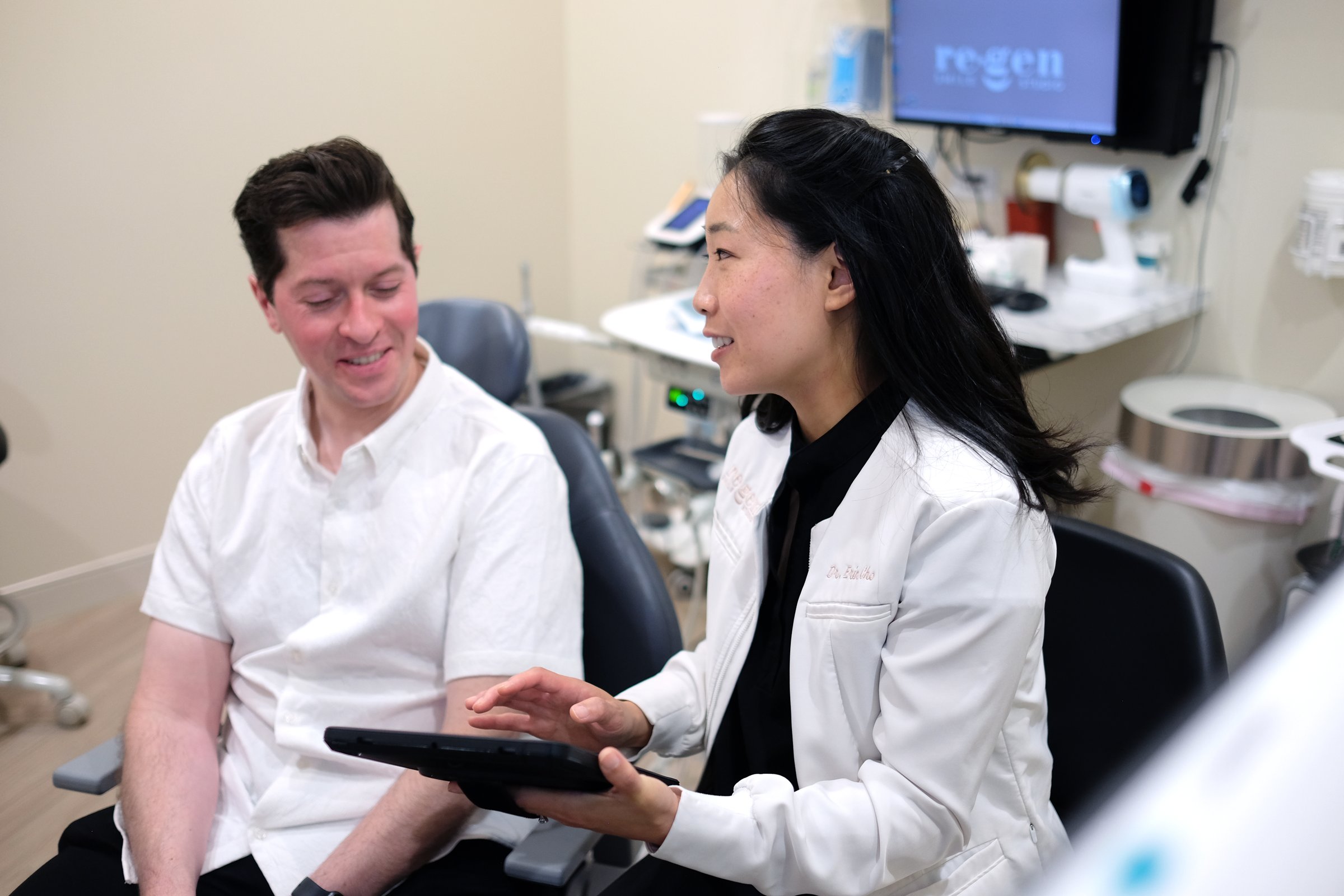
How a soft, removable HealthyStart appliance can guide a child's jaws, teeth and breathing habits while they're still growing.
Maybe your child sleeps with their mouth open and snores like a grown-up. Maybe they grind their teeth at night, or their baby teeth are already crowded, with no gaps between them. It's easy to file these under quirks. In a growing child, they can also be early signs that the jaws are developing narrow, and that's what a HealthyStart appliance works on.
HealthyStart is a system of soft, removable mouthpieces made for children. Dr. Erin is a HealthyStart provider, and at our Lakeview practice in Chicago we use the appliances to guide growth while the jaws are still developing, instead of waiting to correct crowding once the adult teeth are in.
“I hope Re·gen becomes a steady part of people's lives. Seeing kids grow up in the practice …”
Start with how your child breathes and sleeps. Breathing through the mouth during the day, sleeping with the mouth open, snoring and restless sleep are all worth mentioning at their next visit. So are grinding at night, a thumb or pacifier habit that lasts past the toddler years, and a tongue that pushes forward between the teeth when they swallow.
Then look at the teeth. It's tempting to ignore crooked baby teeth, since they'll fall out anyway. The jaw they sit in stays, though, and its width decides how much room the adult teeth get. Baby teeth are meant to have small gaps between them, because the teeth that replace them are bigger. Tightly packed baby teeth usually mean less room later.
One sign on its own doesn't mean anything is wrong. Often the right answer is to keep an eye on things and check again in six months. Treatment comes in when the signs add up, so your child doesn't start something they may not need.

The appliance is a soft, flexible mouthpiece, a little like a sports mouthguard. Children mostly wear it while they sleep, plus a short time during the day.
It works on the habits that shape the jaws. The appliance guides the tongue up to rest against the roof of the mouth, where it belongs, and encourages the lips to stay closed so breathing moves through the nose. As those habits settle, the jaws have a better chance to grow to their full width, and the adult teeth have more room to come in straight.
We look at habits as closely as teeth. With any patient, we want to know why a problem started. With children, the answer is often in how they breathe, swallow and rest their tongue. So that's where we start, with the cause, while there's still growing time to work with.
A palate expander widens the upper jaw. In children, the upper jaw is still two halves joined by a seam down the middle that hasn't fused yet. The expander sits against the roof of the mouth and is turned a tiny amount at a time, slowly easing the two halves apart. New bone fills in the seam behind it.
Expanders usually stay in for a few months. Many children notice a gap opening between their front teeth along the way, which is expected. Whether a child needs an expander, a removable appliance, or nothing yet depends on their age and what the exam shows.
Earlier than most parents expect. The American Association of Orthodontists recommends a child's first orthodontic check by age 7, when the first adult molars and front teeth are coming in and a narrow jaw starts to show.
A first check isn't the same as starting treatment. Often it's a look at the teeth, the bite and the habits, and a plan to look again as your child grows. Some children still need braces or aligners once their adult teeth are in. Early guidance can make that later treatment simpler.
“A mouth is always attached to a whole person and the whole mouth always matters.”
Our founder, Dr. Erin Cho, and Dr. Ashley Choi, both trained at the University of Illinois Chicago.
Meet our team
3208 N Lincoln Ave, Lakeview. Open Tuesday to Friday, with street parking nearby.
About the studioSomething else on your mind? Call (312) 584-0707
Often while they still have most of their baby teeth. The right time depends on the child, which is why a first check by age 7 is a good idea.
No. Braces move teeth after they've come in. HealthyStart works earlier, on the habits and growth that shape the jaws.
Possibly. Some children still need straightening once their adult teeth are in, but early guidance can make it simpler.
Not usually. Children feel pressure for a few days after it's placed or turned, and then it settles.
Yes. Breathing through the mouth changes where the tongue rests, which can leave the upper jaw narrow and the teeth crowded.
It varies with the child. Many wear a removable appliance for a year or more, with regular checks to see how they're progressing.
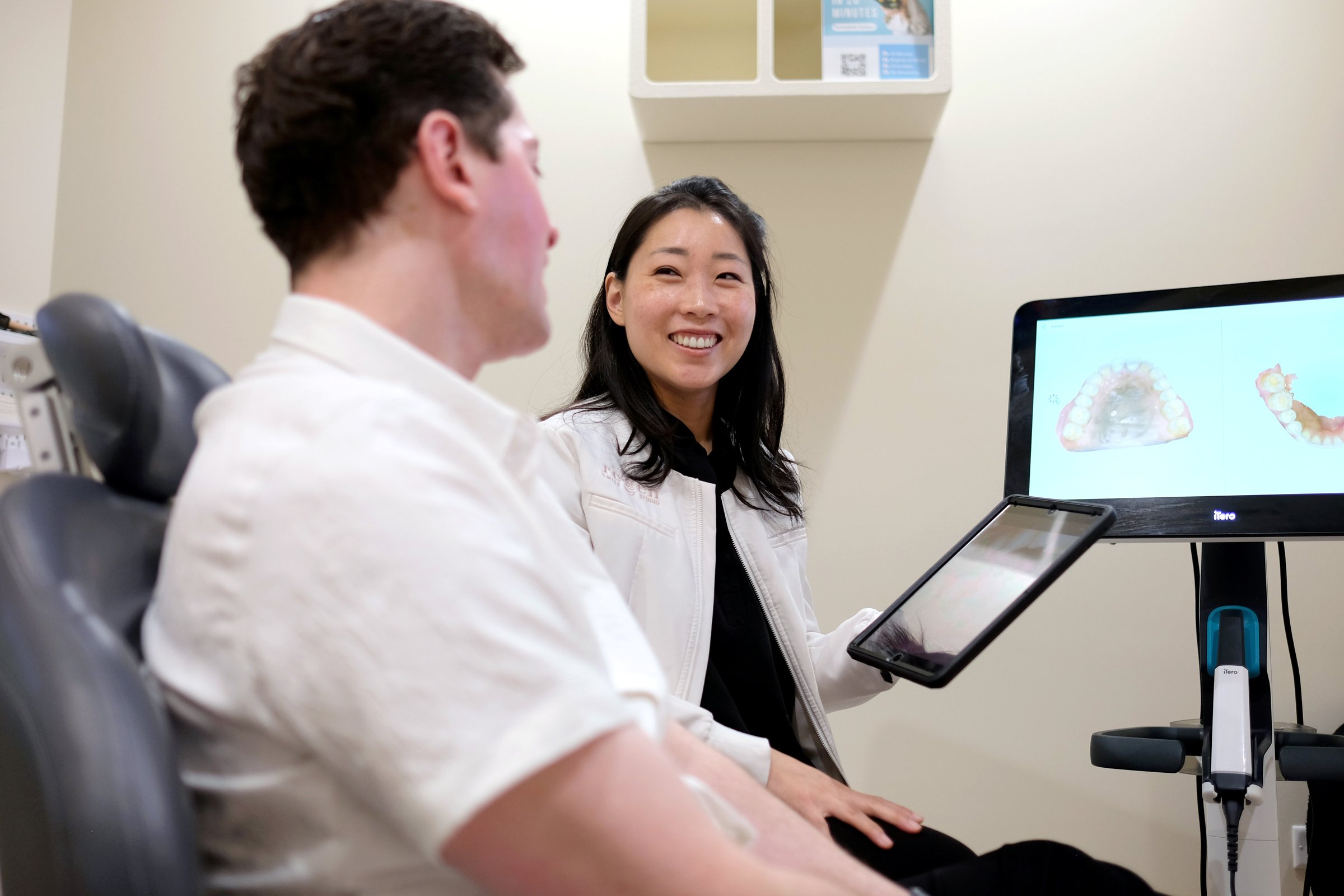
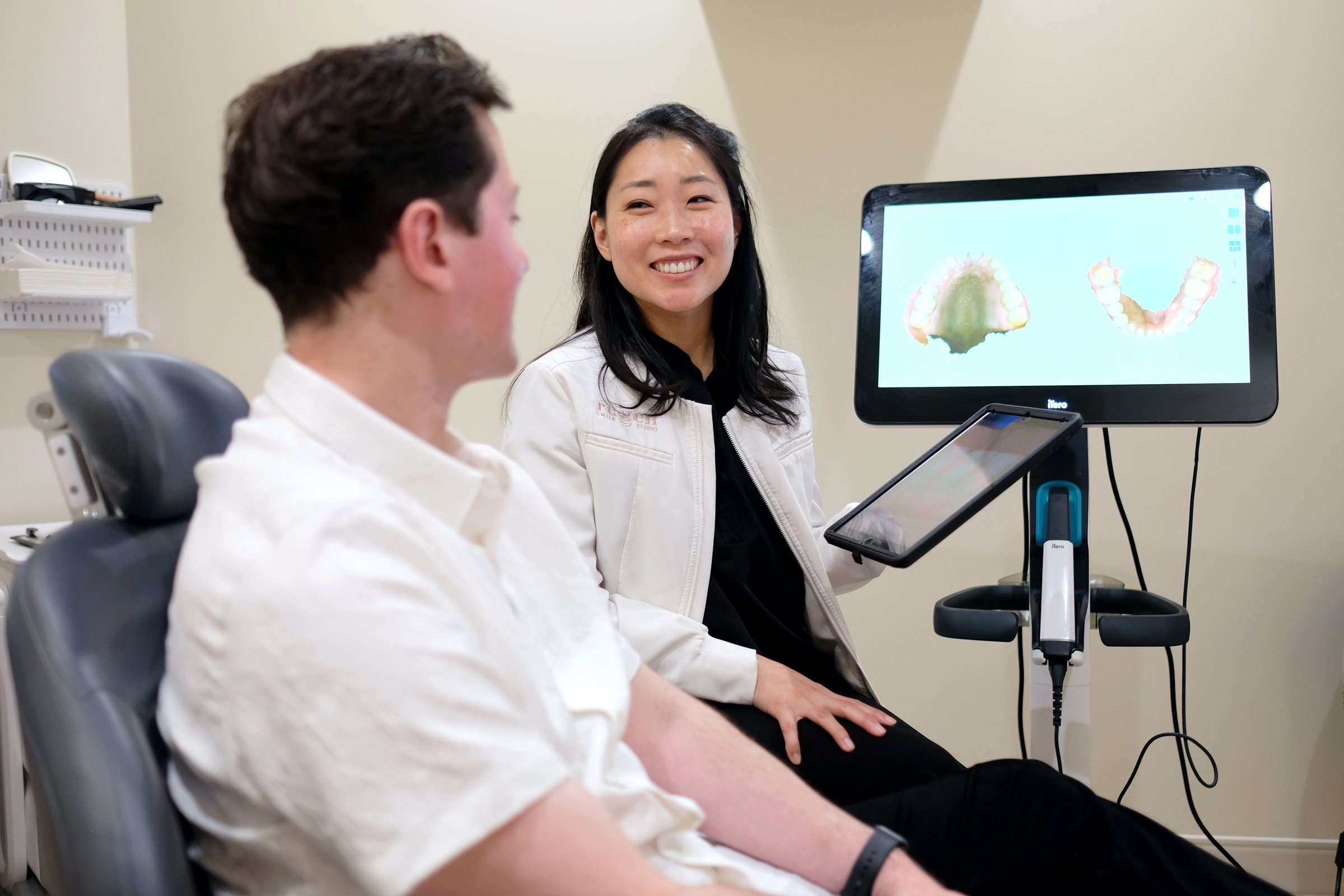
Book a visit. We'll look at your child's teeth, jaws and habits, and talk with you about whether early guidance makes sense now or later.