


Our dentists
Our founder, Dr. Erin Cho, and Dr. Ashley Choi, both trained at the University of Illinois Chicago.
Meet our team
A 3D dental scan of your teeth and bite, shown to you on the screen, to spot small changes before they turn into bigger ones.
A front tooth looks a little shorter than it used to. Your partner says you grind at night. An old filling feels rough under your tongue. Changes like these happen over months and years, and they're hard to see in a bathroom mirror. A 3D dental scan at our Lakeview studio in Chicago makes them easier to see.
The scan takes a few minutes. Then it goes up on a big screen, and you look at your own teeth, gums and bite with Dr. Erin before anything is decided.
“I try to stay a step ahead. We use tools like wellness scans and saliva testing, when appropriate, to spot risk early. My goal is to catch small changes early so we can intervene gently and support the mouth's natural healing process.”
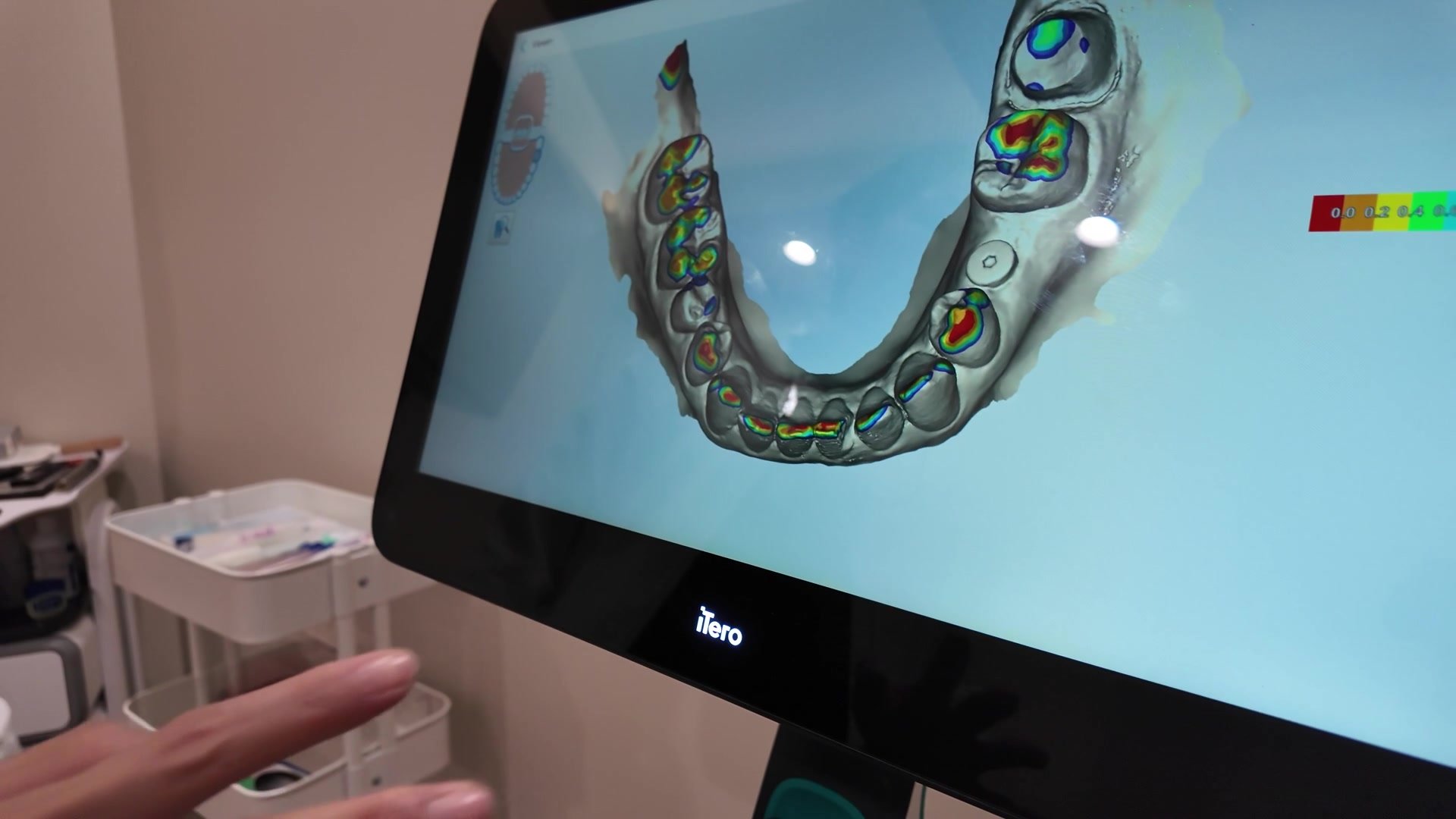
A small handheld wand is moved slowly over your teeth. It takes thousands of pictures and joins them into a 3D model of your teeth, gums and bite. There's no radiation and no tray of putty to bite into, and you can breathe and swallow as normal.
On the screen, the model can be turned and zoomed. You can see the backs of your teeth, which most people have never seen, and how your top and bottom teeth meet when you bite.
The same kind of scan, often called an intraoral scan, is what many dentists now use for digital impressions, in place of putty, when a crown or clear aligners are made.
Flat, shiny spots on the biting edges usually mean grinding or clenching, often at night. Thin, glassy enamel near the gums can come from acid or from brushing too hard. A scan also shows where the gums sit, small cracks and chipped edges, old fillings that are starting to break down, and teeth that have drifted.
We look at the whole mouth on the scan, even if you came in about one tooth, because a tooth usually got the way it is for a reason: your bite, your habits or your gums. Find the reason, and any repair to that tooth lasts.
A scan isn't an X-ray, and it doesn't replace one. It shows the outside of your teeth and gums. X-rays show the inside of the tooth and the bone around it, where decay between teeth or an infection at the root would show up.
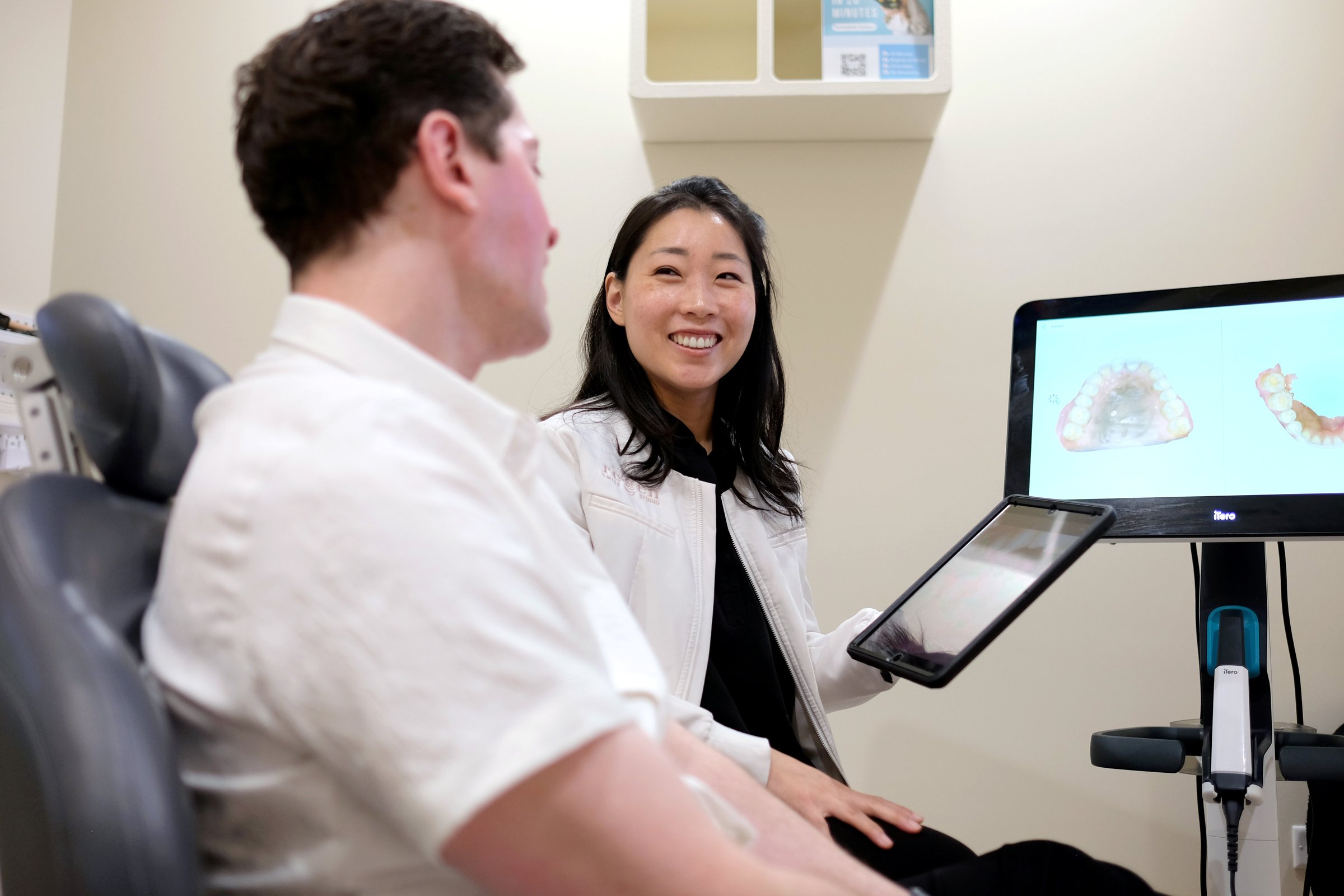
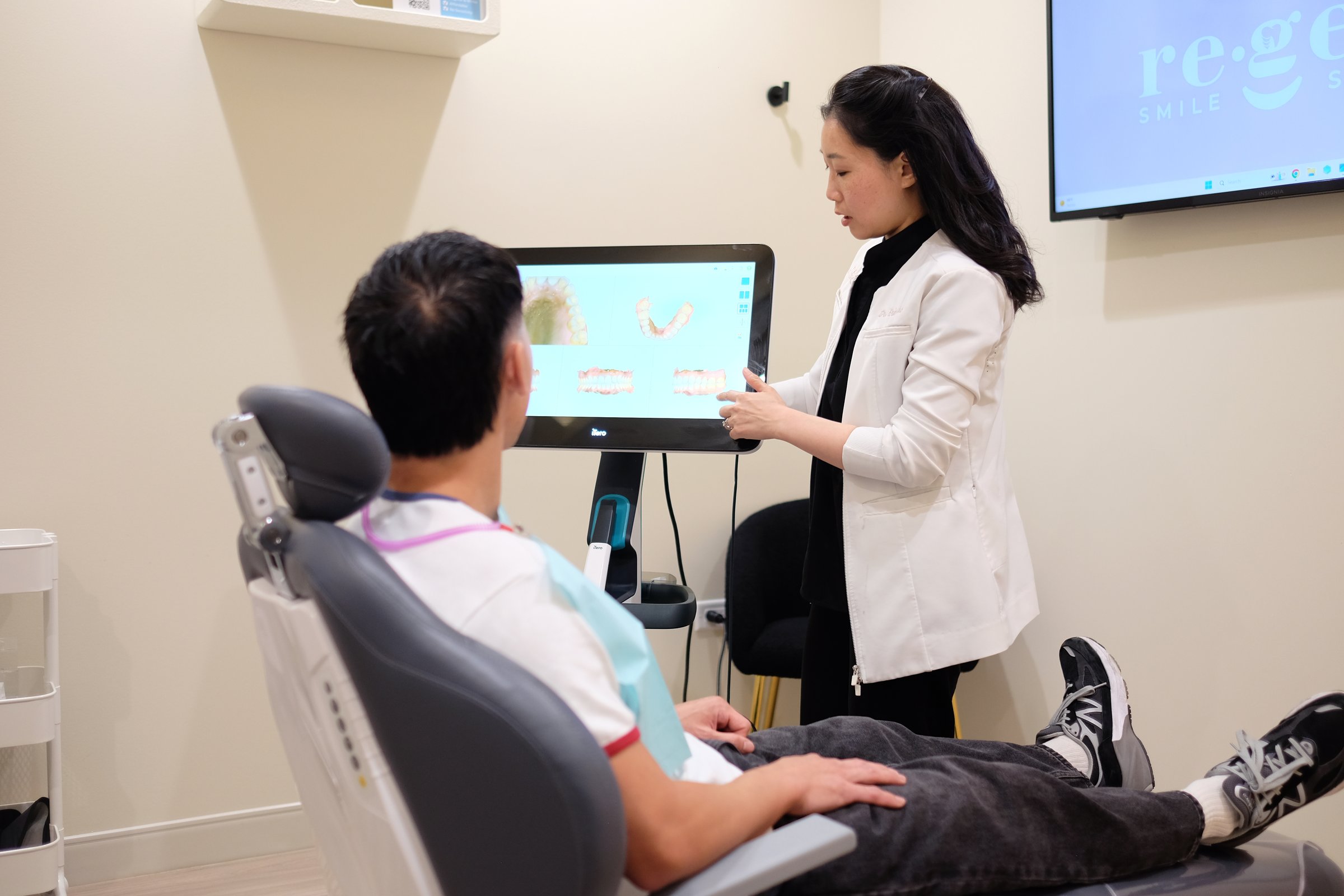
Usually you hear about a worn edge or a receding gum, and you take the dentist's word for it. We think you should see it. Your 3D scan goes up on a big screen, and we turn and zoom it to show you where the change is. People tend to go quiet, then start asking clearer questions, because now they can see it. You understand what's happening in your own mouth, so the decisions about it are yours.
Quite often, the answer is to leave it alone and keep an eye on it. When something does need care, like a night guard for grinding or a small repair to a chipped edge, it can be done before the tooth breaks.
Most wear is slow. You won't notice a fraction of a millimeter a year, and neither will a dentist looking with the naked eye. Set a newer scan beside an older one, though, and a change in wear, gum level or tooth position is much easier to spot.
A side-by-side view also shows when nothing has changed, and a stable tooth can be left alone.
“The 3D scan of your teeth was also very cool to see. I appreciated how thorough Dr. Erin was in explaining things about my teeth when showing me the 3D scan.”
360+ 5-Star Google Reviews
“They actually show you images & x-rays”
“A really nice touch is that they are very transparent with what is being done and why - they actually show you images & x-rays and walk you through what they are seeing.”
 Kory KukukGoogle · Jan 2026
Our founder, Dr. Erin Cho, and Dr. Ashley Choi, both trained at the University of Illinois Chicago.
Meet our team
3208 N Lincoln Ave, Lakeview. Open Tuesday to Friday, with street parking nearby.
About the studioSomething else on your mind? Call (312) 584-0707
No. A 3D scan uses light to capture the outside of your teeth and gums, with no radiation. X-rays show the inside of the teeth and the bone, so the two are used for different things.
No. A small wand moves over your teeth for a few minutes. Most people find it easier than biting into impression putty.
Not reliably. It can show worn enamel and visible damage, but finding decay still takes X-rays and an exam.
Often, yes. Grinding leaves flat, worn spots on the biting edges, and they show up clearly on a 3D model.
Another source of information about your gums. We use it when it's appropriate, for patients who are more prone to gum disease, alongside gum measurements and X-rays.
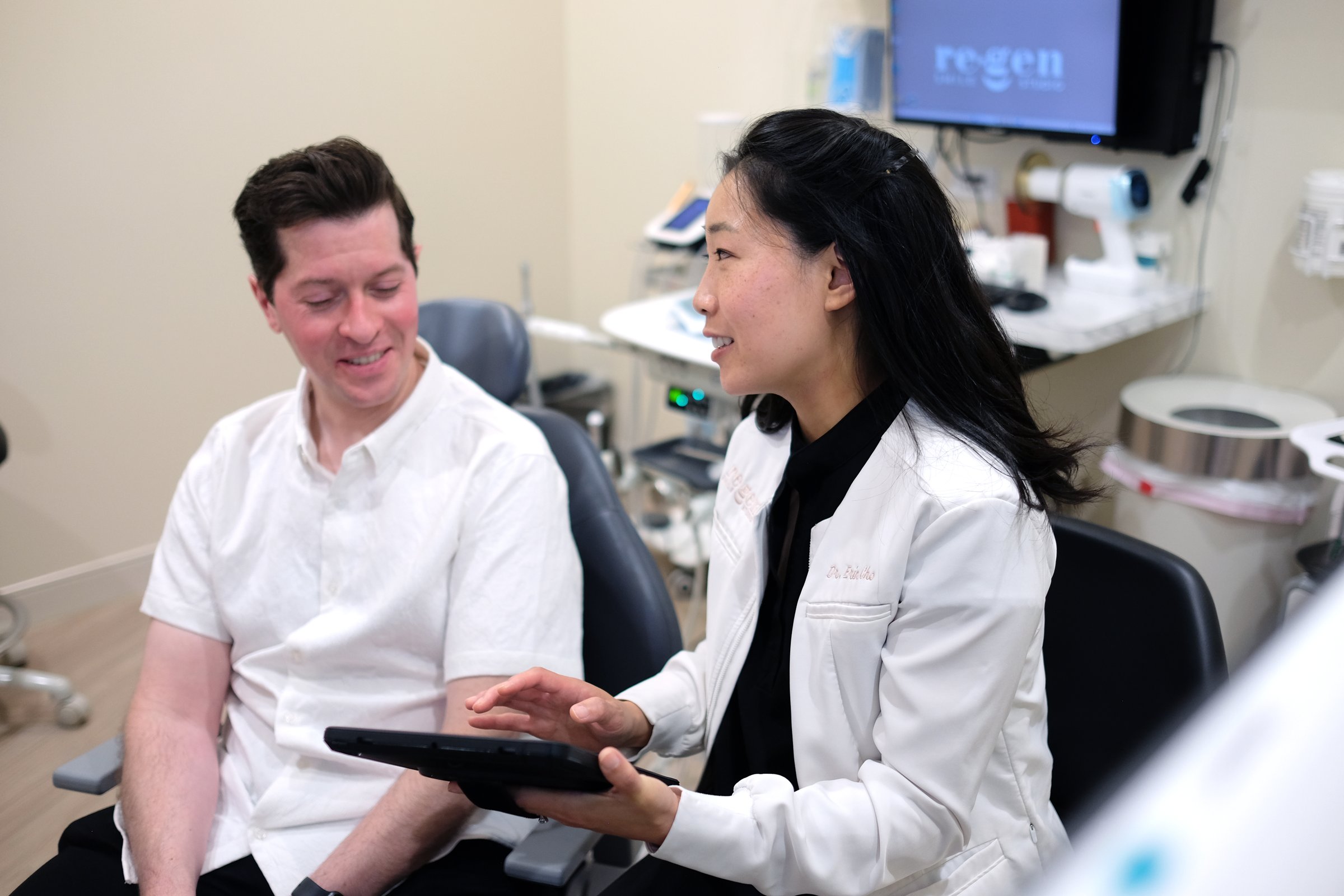
Request an appointment or call us, and we'll go through your scan with you.