

Our dentists
Our founder, Dr. Erin Cho, and Dr. Ashley Choi, both trained at the University of Illinois Chicago.
Meet our team
What the screening checks, the early signs worth knowing, and what happens if something looks unusual.
You bite your cheek, and a week later the spot is still there. Or you notice a pale patch under your tongue while flossing and can't remember if it was always there. Most of the time these are nothing. An oral cancer screening is how a dentist checks.
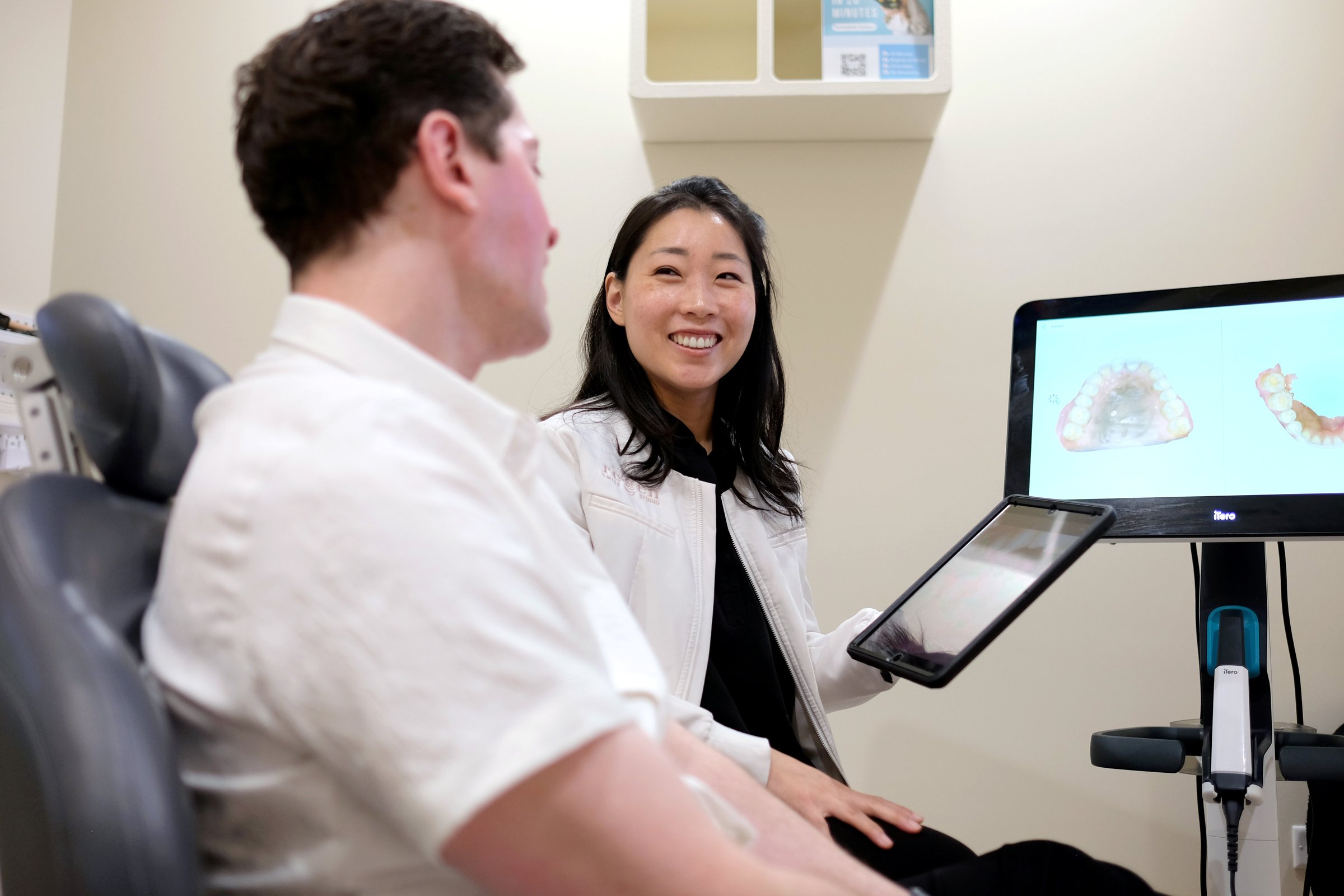
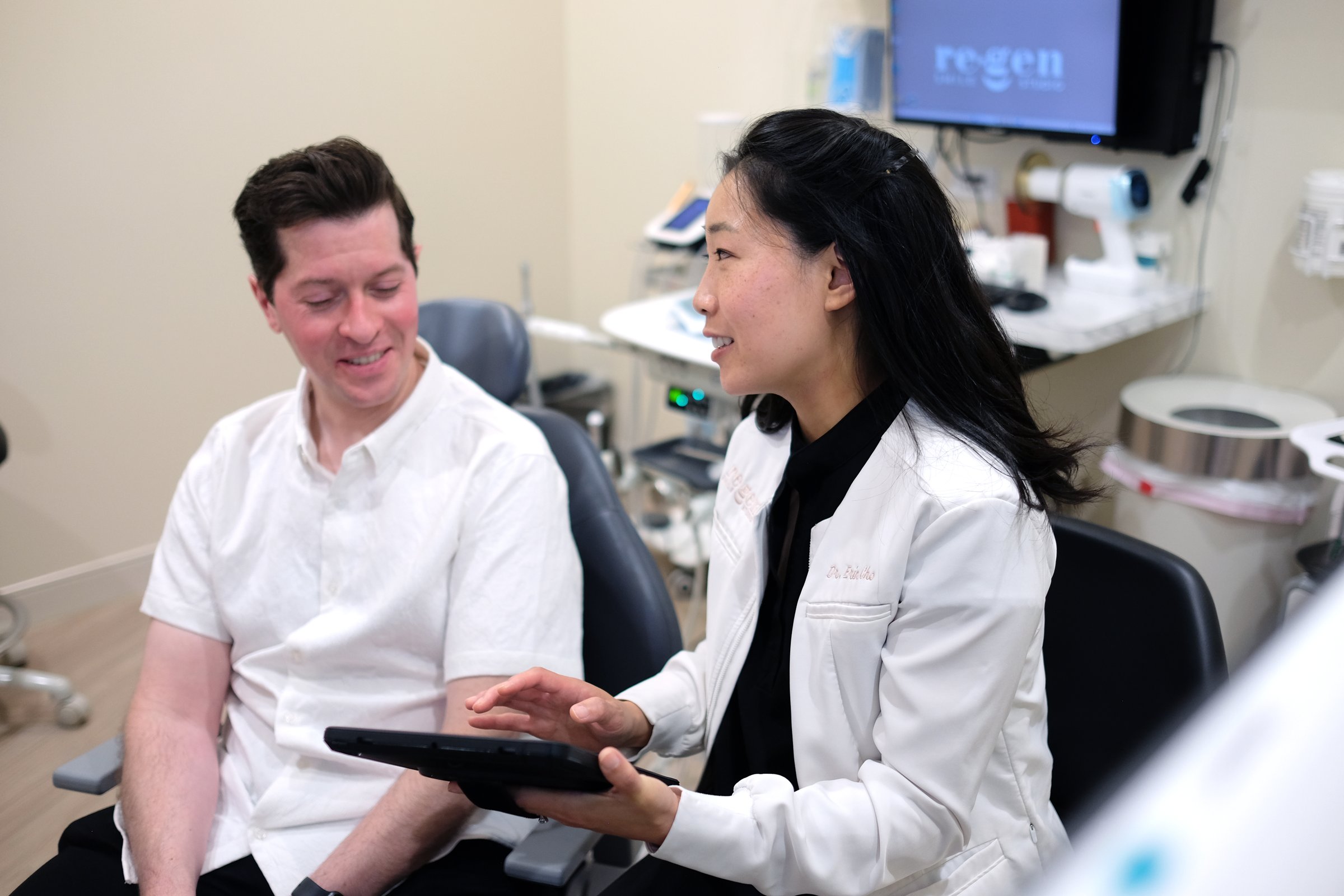
At our Lakeview studio in Chicago, we check for signs of oral cancer as part of your dental exam. It's a look and a gentle feel of your mouth, head and neck. It takes a few minutes and doesn't hurt.
“A mouth is always attached to a whole person and the whole mouth always matters.”

The dentist starts with your lips, inside and out, then your cheeks and gums. You'll be asked to stick your tongue out and move it to each side, because the sides and underside of the tongue are where oral cancer most often starts. Then the floor and roof of your mouth, and the back of your throat. Last, the dentist feels along your jaw and neck for lumps or swollen glands.
We do this even when you've only come in about one tooth, so a spot you can't feel still gets found.
Hearing that a dentist is watching something in your mouth, with no idea where it is, is unsettling. If we see something worth watching, we show you exactly where it is, so you can keep an eye on it too and tell us if it changes.
Many people expect cancer to hurt. Early oral cancer usually doesn't, so pain is a poor guide. A sore that doesn't bother you can still be worth a look.
Most mouth sores are harmless and heal within a week or two. A sore or patch that's still there after two weeks should be checked.
Anyone can get oral cancer, including people with none of the usual risk factors. The risk is higher if you smoke or use other tobacco, drink alcohol regularly (and higher again if you do both), have HPV, or spend a lot of time in the sun without lip balm with SPF. It also rises with age.
HPV is the same virus behind most cervical cancers. The oral cancers it causes tend to start at the back of the throat, and they're increasingly found in younger adults who have never smoked.
If you're about to start chemotherapy or radiation, see a dentist first if you can. Both can leave the mouth dry, sore and prone to infection, so it helps to deal with any problems beforehand.

Most spots turn out to be harmless: a cheek you've bitten, a rough edge on a tooth rubbing the tongue, an ulcer on its way out. A common first step is to fix anything that might be irritating it and look again in about two weeks.
Often, after a careful look, the best answer is just to keep an eye on things. A spot that still hasn't healed is different. The usual next step is a specialist, who may take a small sample of the tissue (a biopsy) to find out what it is.
Our founder, Dr. Erin Cho, and Dr. Ashley Choi, both trained at the University of Illinois Chicago.
Meet our team
3208 N Lincoln Ave, Lakeview. Open Tuesday to Friday, with street parking nearby.
About the studioSomething else on your mind? Call (312) 584-0707
At every regular checkup. If you have risk factors, your dentist may look more closely or more often.
No. It's a look and a gentle feel of your mouth and neck, and it takes a few minutes.
Usually a red or white patch, or a sore that doesn't heal. It often doesn't hurt, which is why a two-week-old sore is worth showing a dentist.
Yes. Cancers linked to HPV, often at the back of the throat, are increasingly found in younger adults who don't smoke.
Usually, because it's part of a routine exam. We make using your dental benefits simple. Contact us and our team will be happy to help you understand what your plan may cover.
Request an appointment or call us, and we'll take a look.