

Our dentists
Our founder, Dr. Erin Cho, and Dr. Ashley Choi, both trained at the University of Illinois Chicago.
Meet our team
When wisdom teeth need to come out, when they can stay, and how to look after yourself while you heal.
It usually starts at the very back of your mouth. The gum behind your last molar gets sore and puffy, food keeps getting stuck there, or a dull ache spreads toward your ear. Sometimes nothing hurts at all, and a dentist points out a tooth on your X-ray that's growing in sideways. Either way, the question is whether you need wisdom teeth removal or whether the tooth can stay.
Wisdom teeth are taken out here at our Lakeview practice on Lincoln Avenue in Chicago, and if one is hurting now, we offer same-day appointments. Below is how to tell whether yours should come out, what the X-ray shows, and what the first few days of healing are like.
“Sometimes people come in worried and expecting a mouthful of problems, and after we take a careful look, the best answer is just to keep an eye on things.”
No. Plenty of people assume everyone has them out sooner or later, but a wisdom tooth that came in straight, meets the tooth above it and can be kept clean may stay for life.
Removal makes sense when a tooth is causing trouble, or is very likely to. The usual reasons are a sore, infected gum around a tooth that's only partly through, decay in the wisdom tooth or the molar in front of it, a tooth pressing into the root of its neighbor, and, less often, a cyst around a tooth that never came in.
Even when you come in about one sore tooth, we zoom out and check your bite, your gums and the teeth around it, so you know why the problem started and whether your other wisdom teeth are likely to cause the same trouble.
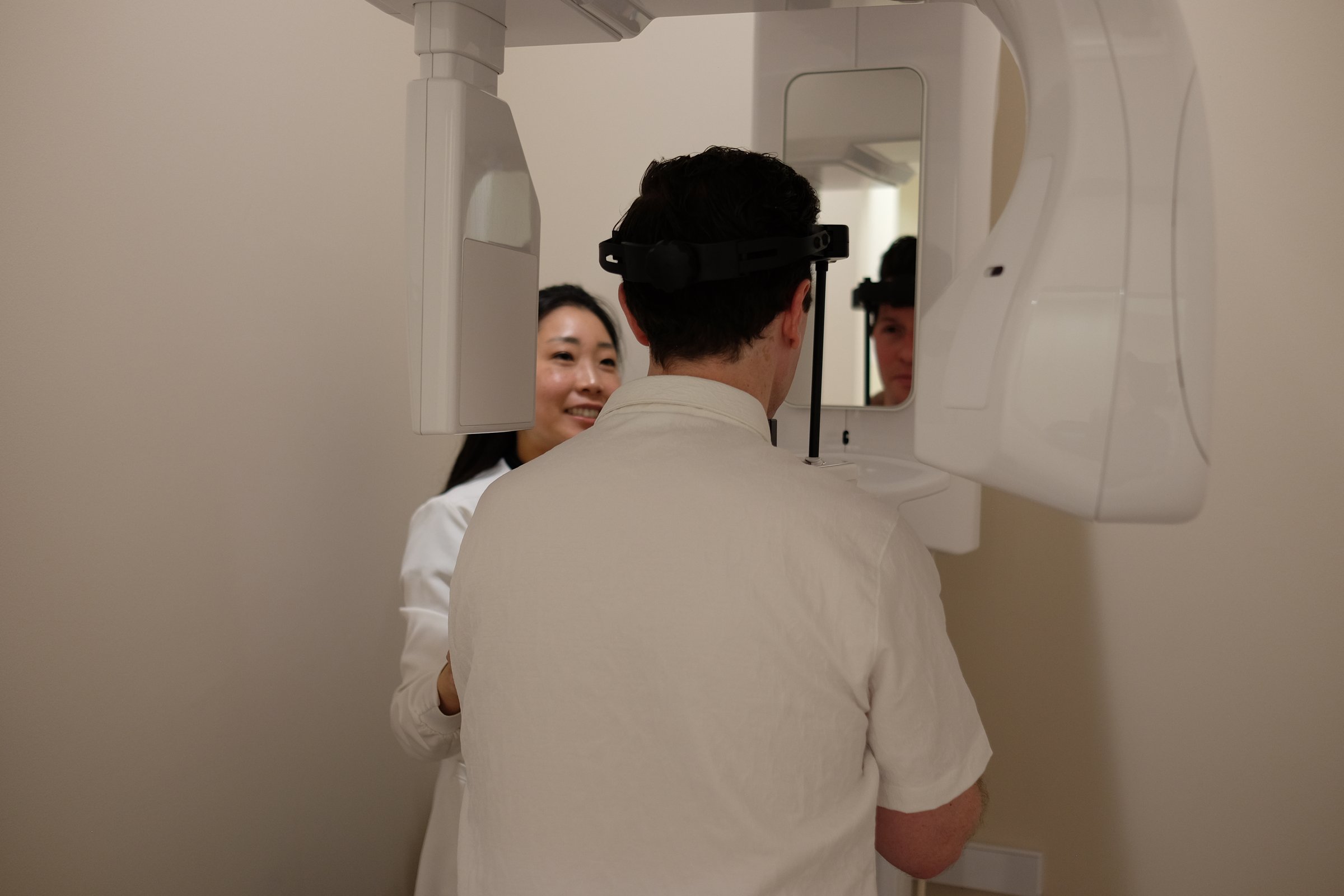
A panoramic X-ray takes in your whole mouth in one picture, including teeth still hidden under the gum. It shows the angle of each wisdom tooth, the shape of its roots, and how close the lower ones sit to the nerve that gives feeling to your lip and chin.
An impacted wisdom tooth is one that's stuck under the gum or in the bone, usually because the molar in front is in the way. Some lean forward into that molar. Some lie almost flat. The X-ray shows which kind you have, and how involved taking it out would be.
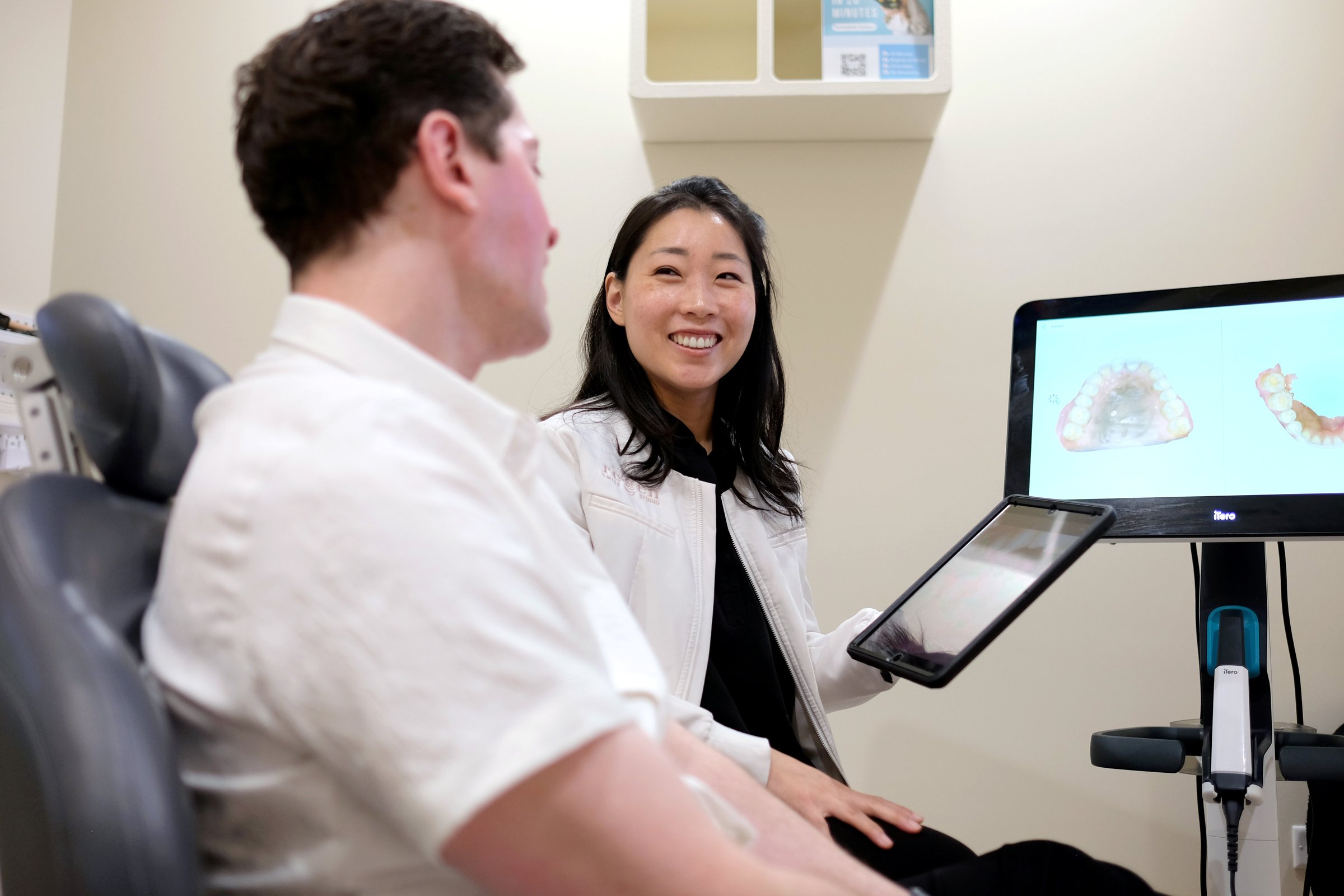
Usually you hear that a wisdom tooth should come out and are left to take it on trust. We think you should see it first. The X-ray goes up on the screen and we go through it with you before you decide anything. People ask clearer questions once they can actually see the tooth, and you'll know why yours should come out, or why it can stay.
Most wisdom tooth pain comes from the flap of gum over a tooth that's partly through. Food slips under it and the gum swells, a problem called pericoronitis. Rinse with warm salt water after you eat, brush gently right to the back, and take an over-the-counter pain reliever as the label says.
Call us if the pain keeps coming back, if there's a bad taste that won't rinse away, or if it hurts to open your mouth wide. Those usually mean an infection, and it won't clear up on its own. Go to the emergency room if swelling spreads toward your eye or down your neck, or if you have trouble breathing or swallowing.
Plan for a few quiet days. Swelling usually peaks on the second or third day, then settles. Most people are back at work or school within a few days, and the gum closes over in a week or two. The bone underneath takes longer to fill in, but you won't feel that.
The thing to protect is the blood clot that forms in the socket. If it comes loose too early, the bone is left exposed and the socket starts to ache, usually around day three or four. That's called dry socket. It's treatable, so call us if it happens.
“I was in extreme pain due to my wisdom tooth. I'm not going to lie—I was very nervous, in addition to being in pain. I did not feel any pain during my wisdom tooth removal, and I'm actually very glad I chose to come here.”
360+ 5-Star Google Reviews
“I did not feel any pain during my wisdom tooth removal”
“When I called here, I was given an appointment within two days, which was great because I was in extreme pain… I did not feel any pain during my wisdom tooth removal, and I'm actually very glad I chose to come here.”
 Andrea OrnelasGoogle · Apr 2026
“We had such an amazing experience”
“…not only did they get us in for a same day consultation but they also pulled his wisdom teeth out. We had such an amazing experience.”
 Klaudia ReGoogle · Apr 2026
Our founder, Dr. Erin Cho, and Dr. Ashley Choi, both trained at the University of Illinois Chicago.
Meet our team
3208 N Lincoln Ave, Lakeview. Open Tuesday to Friday, with street parking nearby.
About the studioSomething else on your mind? Call (312) 584-0707
Sometimes. We offer same-day appointments for urgent problems, and some patients have had a wisdom tooth taken out on the day of their consultation. It depends on the tooth and what the X-ray shows.
Not while it's happening. The area is numbed first, so you feel pressure but not sharp pain. Expect soreness for a few days afterward, which over-the-counter pain relief usually handles.
It's urgent. Call us so it can be seen quickly. Go to the emergency room if swelling spreads toward your eye or neck, or if you have trouble breathing or swallowing.
Soft, cool food for the first few days: yogurt, eggs, smoothies with a spoon instead of a straw, and soup once it has cooled. Go back to normal food as it feels comfortable.
Pain that gets worse around day three or four, instead of better, is the usual sign. It often spreads toward the ear, and the socket can look empty. Call us; it's treatable.
There's no set age. If they need to come out, it's often easier in the late teens or early twenties, when the roots are shorter and healing is quicker, but they can be removed at any age.
Call Regen Smile Studio or request an appointment and we'll help you find the soonest available time.